
How Much Does Custom Software Cost? What Defines the Price (and What Doesn't)
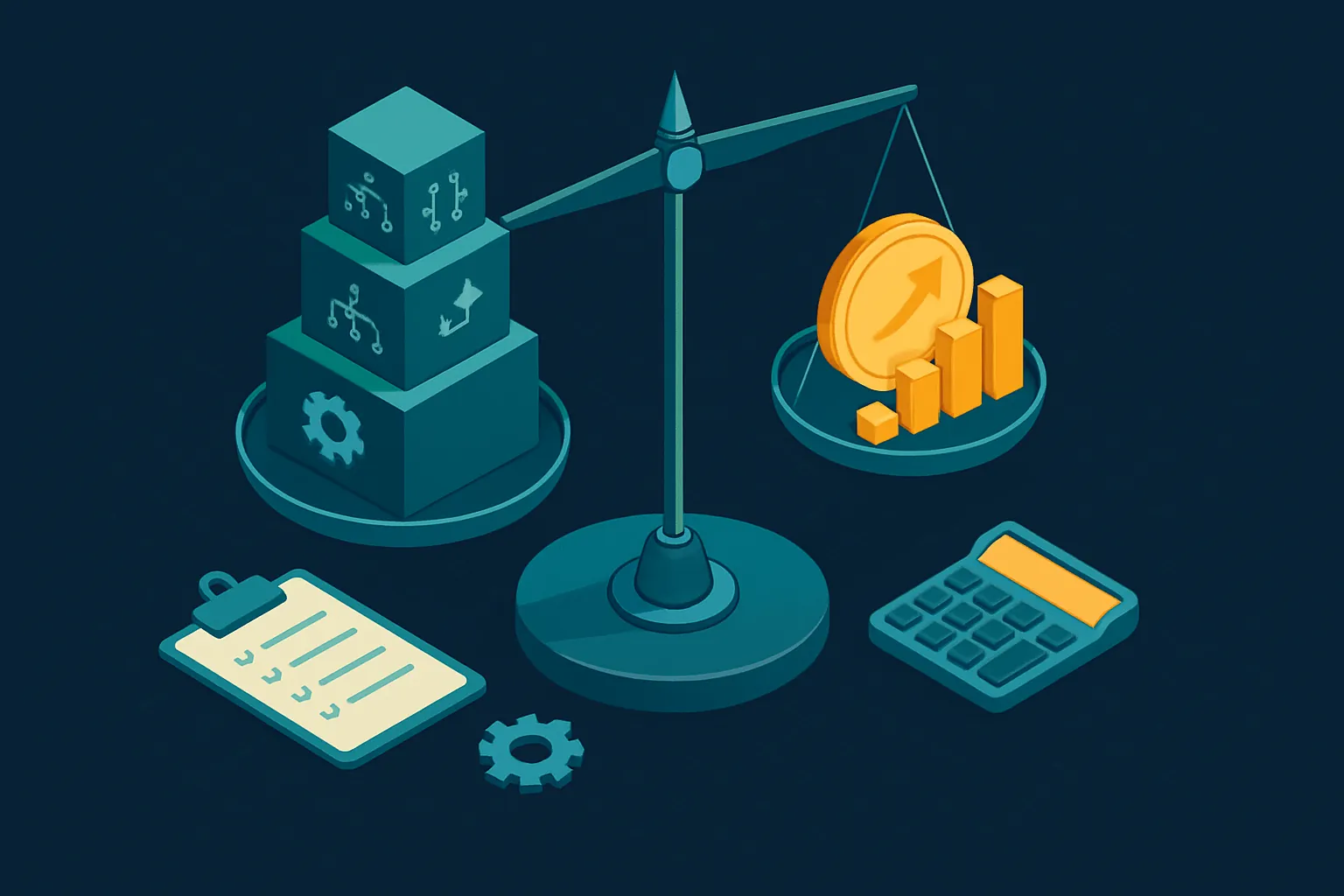
It’s the first question almost everyone asks when they think about building software: “how much will it cost me?”. And the honest answer —“it depends”— tends to frustrate, because it doesn’t help you budget. So instead of dodging it, let’s explain what it depends on, so you understand what drives the price and can ask for a quote with a clear head.
Why there’s no “list price”
Custom software is called that because it’s built for your specific operation. It’s not a product on a shelf with a fixed price; it’s more like building a house: the cost depends on the size, the materials, the finishes and how special what you want is. Two projects that “sound” alike can cost very differently depending on what’s behind them.
That’s why anyone who gives you a fixed price on the first call —without understanding your business— almost always ends up charging more later, or delivering less than you expected.
The factors that really drive the price
These carry the most weight:
- Scope: how many screens, features and processes it includes. This is factor number one. A simple tool doesn’t cost the same as a system that runs your whole operation.
- Integrations: connecting to your invoicing, your ERP, payment gateways or external services. Each connection adds work.
- Platforms: web only? Also an app for iOS and Android? Technologies like React Native optimize this, but more platforms means more scope.
- Users and roles: handling accounts, permissions, different user types and security adds complexity.
- Design: a polished, easy-to-use interface takes design work, and it pays off in adoption and fewer errors.
- Data and business rules: the more particular and complex your logic, the more effort it takes to build it well.
What should NOT define the price
Just as important is knowing what does not justify a higher cost:
- Buzzwords: a vendor mentioning “AI” or “blockchain” doesn’t make anything more expensive by itself. What costs is the real problem it solves, not the label.
- Poorly handled urgency: a serious vendor doesn’t charge you triple “because you want it fast”; they plan the stages with you.
- Features no one asked for: watch out for inflated quotes full of things that sound nice but your business doesn’t need yet.
The other side of the coin: it’s not an expense, it’s an investment

Price doesn’t make sense on its own; it’s compared against what it generates. Good software saves you hours, reduces errors and helps you sell more, every day, for years. And unlike a monthly rent for generic software, custom development is an asset of yours: you don’t pay endless licenses and it grows with your business.
That’s why the most useful question isn’t “how much does it cost?”, but “how much does it save or generate me, and how long until it pays for itself?”.
How to ask for a quote without surprises
- Explain the problem, not the technical solution: “I want to cut invoicing time”, not “I want a button”.
- Ask for a breakdown by stages (requirements, design, development, testing) instead of a loose number.
- Require partial deliveries: you should see progress every few weeks, not just at the end.
- Confirm what’s included after launch: support, maintenance and who owns the code (it should be you).
If you want to go deeper, we wrote a full guide on choosing the right company.
In short
There’s no single price because there’s no single piece of software. What does exist is a serious way to quote: understand your business, define the scope and lay it out in stages. An honest vendor starts there —and often, with an MVP you can start cheaper and grow on results.
At Kimo Solutions we analyze your project before giving you a number: we understand your operation, define the scope and hand you a clear, staged quote with no surprises.
Want to know what your project would cost? Contact us for a free consultation and a no-commitment quote.
Have a project in mind?
Get in touch →