
Custom Time & Attendance Software: How to Stay Compliant and Stop Losing Labor Hours
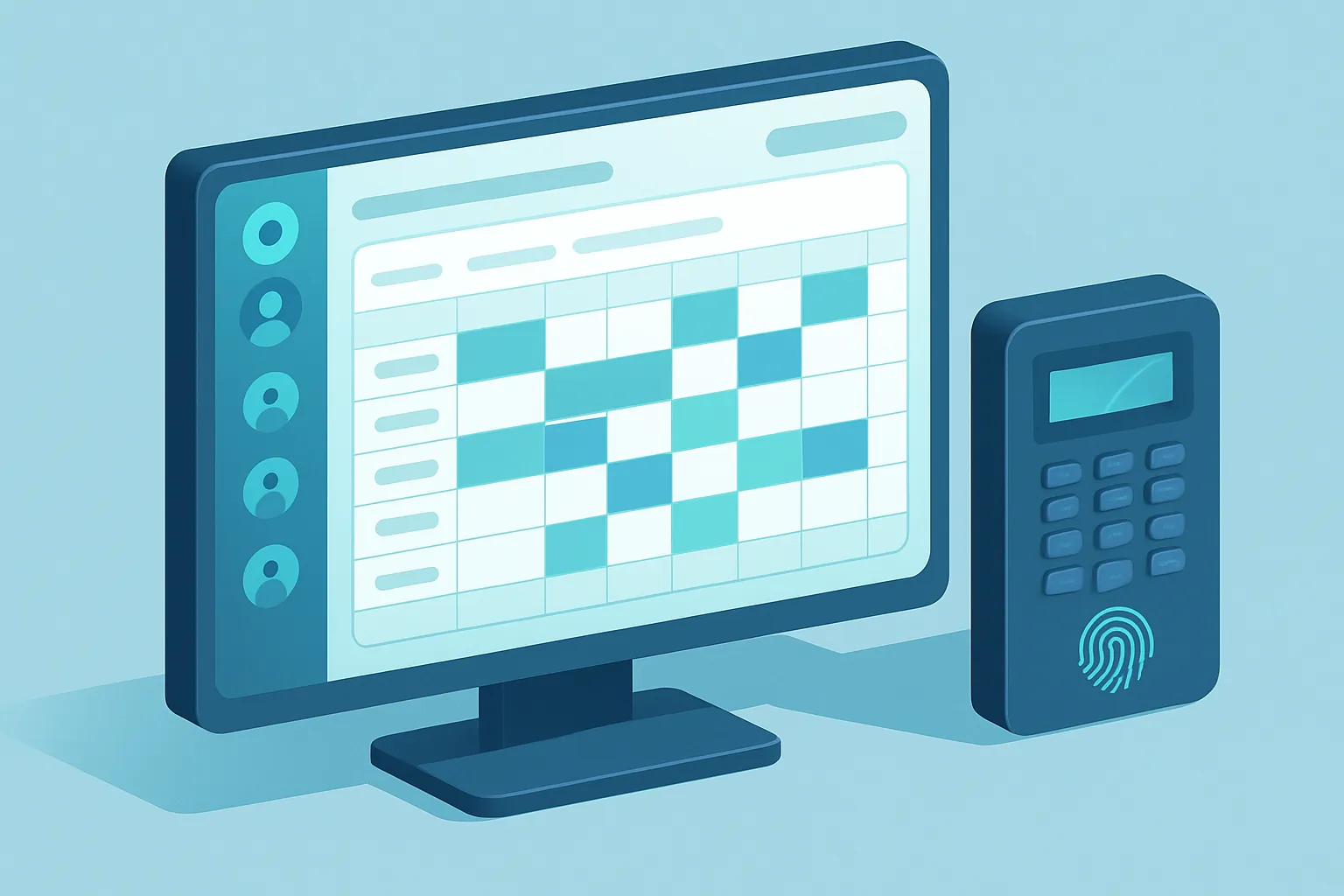
The biometric clock logs the check-in at 8:03 a.m. That single data point, though, rarely makes it to where it actually matters: payroll, productivity reports, or the evidence a company needs if a labor authority asks about an employee’s overtime. In most mid-size companies, that data stays trapped inside the time clock’s own software, while shifts get built in a spreadsheet and exceptions — time-off requests, late arrivals, absences — get reported to the supervisor on duty over WhatsApp.
Custom time and attendance software exists to close that gap: connecting real clock-in and clock-out data with shift planning, overtime calculation, and labor law compliance, all in one place.
Why the time clock alone doesn’t solve the problem
Buying a time clock — biometric, badge-based, or app-based — is only the first step. The real problem shows up afterward, when that data has to turn into decisions:
- Shifts built by hand. The operations lead builds the week’s schedule in a spreadsheet, with no real-time view of who has already covered their hours or who is about to hit overtime.
- Overtime nobody approved. The company only discovers overtime hours when payroll is run, by which point it’s too late to decide whether to approve them or cover the shift with someone else.
- Scattered exceptions. Time-off requests, sick leave, and absences get reported through different channels — WhatsApp, email, verbally — and HR has to piece it all together by hand every pay period.
- Weak evidence in an audit. If the company needs to prove compliance with working-hour regulations, or defend itself in a labor dispute, scattered records with no clear trail are a real problem, not just an administrative inconvenience.
- Multiple sites, zero central visibility. Each location tracks attendance its own way, and leadership has no way to compare punctuality, absenteeism, or shift coverage across plants or branches.
None of these signs is dramatic on its own. Together, though, they explain why companies that already invested in a time clock still close payroll by hand, run late, and can’t say with confidence how much overtime was generated last month, or why.
What custom time and attendance software should solve
Connected capture, not an isolated silo
Clock-in and clock-out data — biometric, badge-based, or geolocated from a mobile app for field staff — should feed directly into the scheduling and payroll engine, with no manual exports or hand-reconciliation in between.
Shift planning with your own business rules
Every company has its own shift logic: rotating shifts, demand-based scheduling, staggered breaks, or rules specific to a given role. Custom software models those rules the way the business actually operates, not the other way around, and automatically flags a shift left uncovered or an employee approaching their legal working-hour limit.
Automatic overtime and exception calculation
Overtime, late arrivals, and absences are calculated directly from real attendance data, with local labor-law rules built in from the start — shift limits, mandatory rest periods, overtime multipliers — instead of being left to manual interpretation every pay period.
Full traceability for audits and payroll
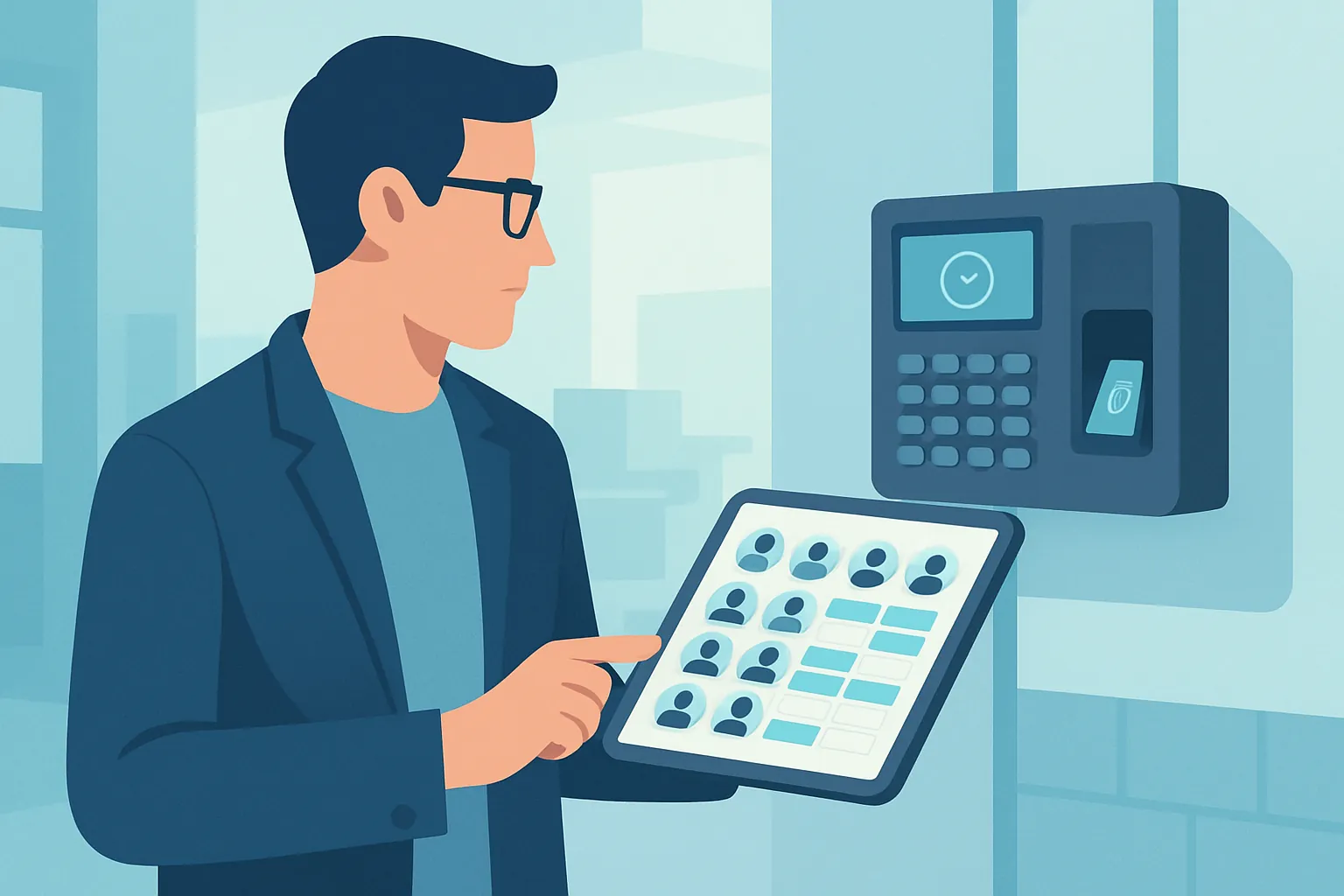
Every record is logged with date, time, location, and, where applicable, biometric evidence. That turns the system into the single source of truth HR and legal need if working-hour compliance ever has to be proven to a regulator or in a dispute.
Centralized visibility across sites
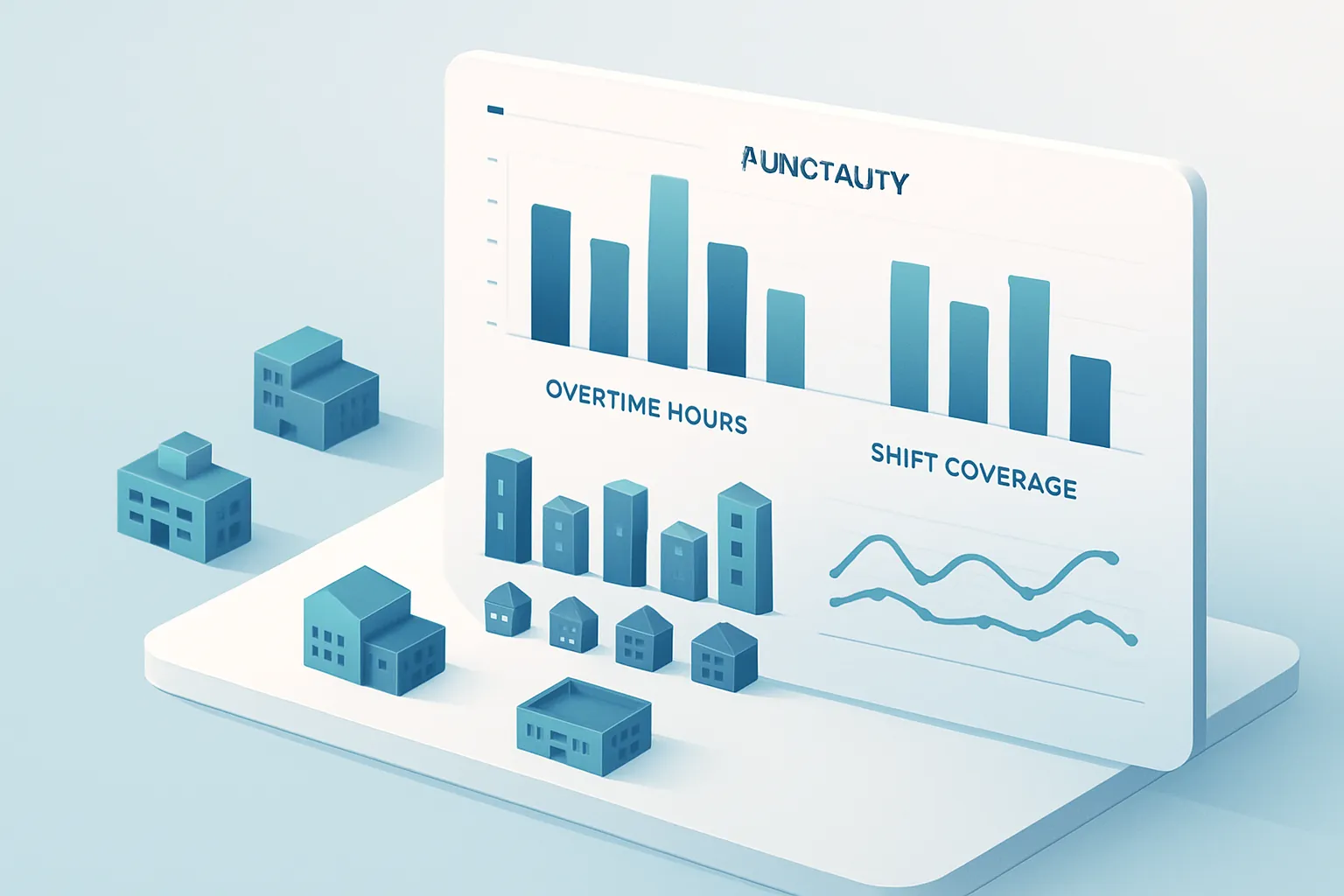
Leadership sees punctuality, absenteeism, accumulated overtime, and shift coverage by branch, plant, or department in one dashboard — comparing real performance instead of relying on separate, delayed reports.
The real cost of leaving it unsolved
Poorly controlled overtime isn’t just a compliance issue — it’s money leaving the company without anyone deciding it in time. A supervisor who approves one more overtime hour without knowing five were already logged that week, or a plant that only discovers a shift went uncovered for three days once payroll runs, are exactly the kind of mistakes a connected system prevents before they happen, not after.
Benefits that show up in day-to-day operations
- Faster, more accurate payroll, because overtime and exceptions arrive already calculated instead of being assembled by hand every pay period.
- Less unplanned overtime, because supervisors see shift coverage in real time and decide ahead of time, not after the fact.
- Defensible compliance, with full traceability if the company ever needs to prove working-hour records to a labor authority.
- Real cross-site visibility, comparing punctuality and absenteeism with data instead of impressions.
How to get started
There’s no need to replace the time clock hardware already in place. What usually works best is connecting that existing hardware to a scheduling and payroll system designed around how the company actually runs its shifts, then growing from there into automated reporting, alerts, and compliance.
At Kimo Solutions, we design time and attendance systems around how your operation actually works, not the other way around. If your company is still building shifts and payroll by hand, let’s talk about your operation.
Have a project in mind?
Get in touch →