
Custom Software for Agribusiness: Harvest, Inventory, and Traceability in One System
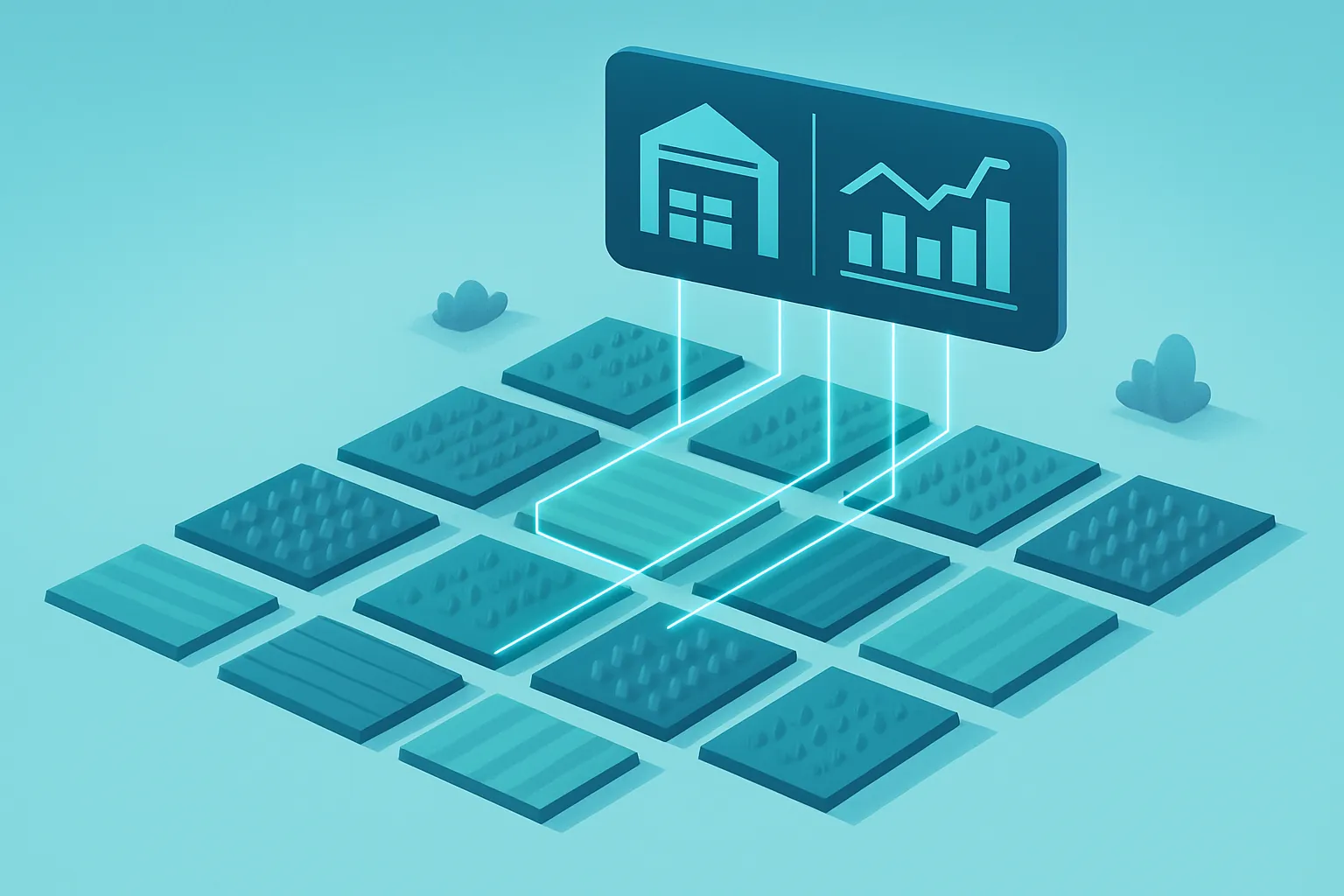
Mexico is one of the world’s leading agricultural exporters, yet a large part of that chain — from grower to packer to exporter — is still run on field notebooks, scattered spreadsheets, and reports that arrive days late. The result is predictable: nobody knows exactly how much was harvested until days later, the warehouse discovers losses once it’s too late to act, and pulling together the traceability a client or certification requires turns into a multi-day scramble through paper records.
The problem isn’t a lack of data. The data exists: in the field supervisor’s notebook, in the packing manager’s WhatsApp chat, in the sales spreadsheet. The problem is that it lives in different places and nothing connects it.
A custom system fixes this by bringing field operations, warehouse, packing, and sales onto a single platform, with data flowing in real time instead of being reconstructed at the end of the week.
Where the operation loses money
- Per-plot yields that are estimated, not measured. Without a digital record by plot or lot, it’s hard to know which field, variety, or cycle actually delivers the best yield per hectare invested.
- Losses discovered too late. Product gets lost to handling, weather, or idle time between harvest, transport, and packing — and without data by stage, there’s no way to know where the loss is actually happening.
- Traceability assembled by hand. When a buyer or a certification (GlobalG.A.P., organic, export) requests a lot’s full history, the team spends days cross-referencing field logs, scale tickets, and paper invoices.
- No real control over input inventory. Fertilizer, agrochemicals, and packaging get bought “just in case” because nobody has clear visibility into what’s already in the warehouse.
Each of these points cuts into real margin, even when the harvest itself was good.
What a custom agribusiness system includes
1. Field records by plot and cycle
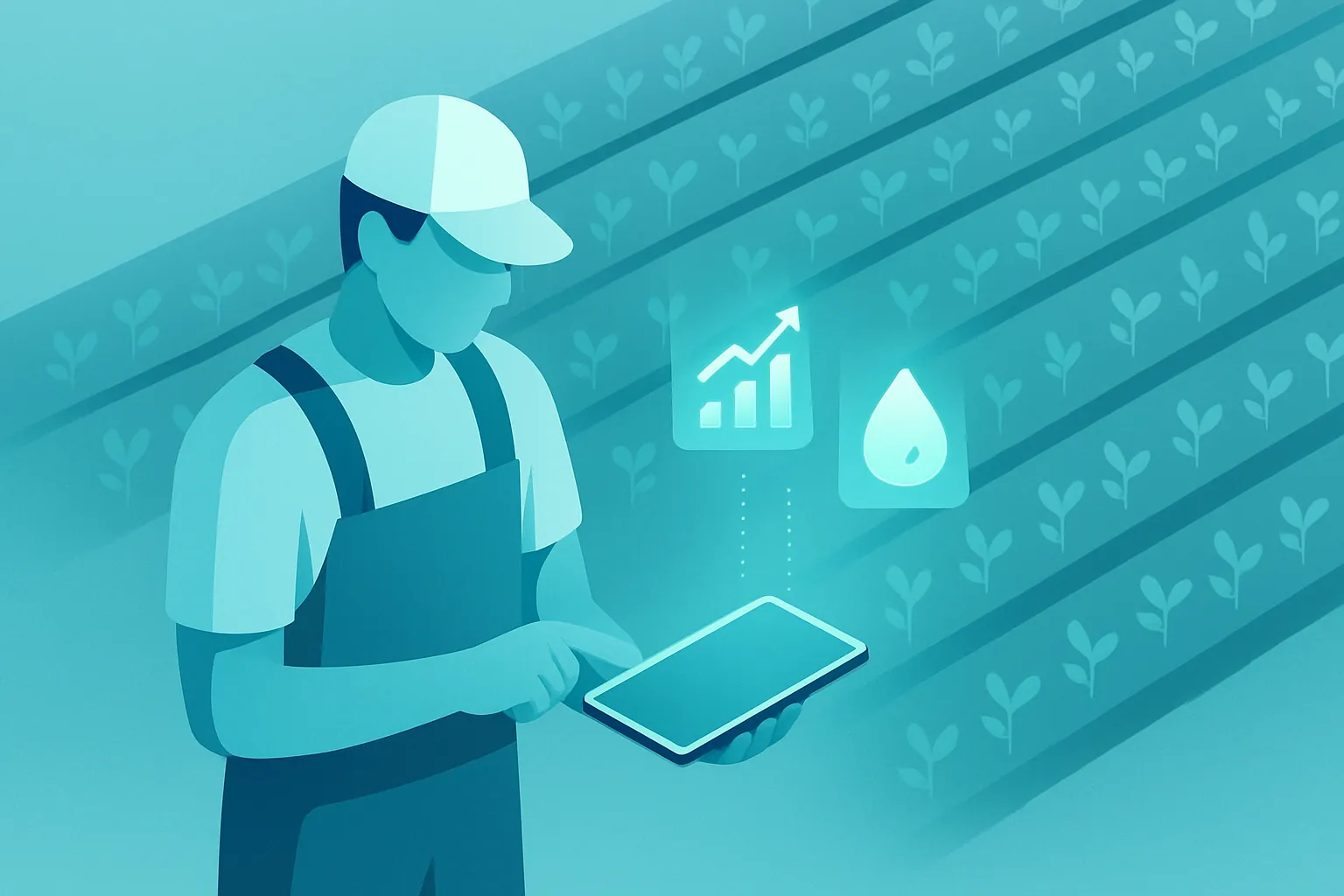
Every plot or lot builds its own history: planting, applications, irrigation, incidents, and harvest, captured from the field supervisor’s phone, even without an internet connection. This makes it possible to compare real yield per hectare across fields, varieties, and seasons, instead of relying on the manager’s memory.
2. Lot-to-customer traceability
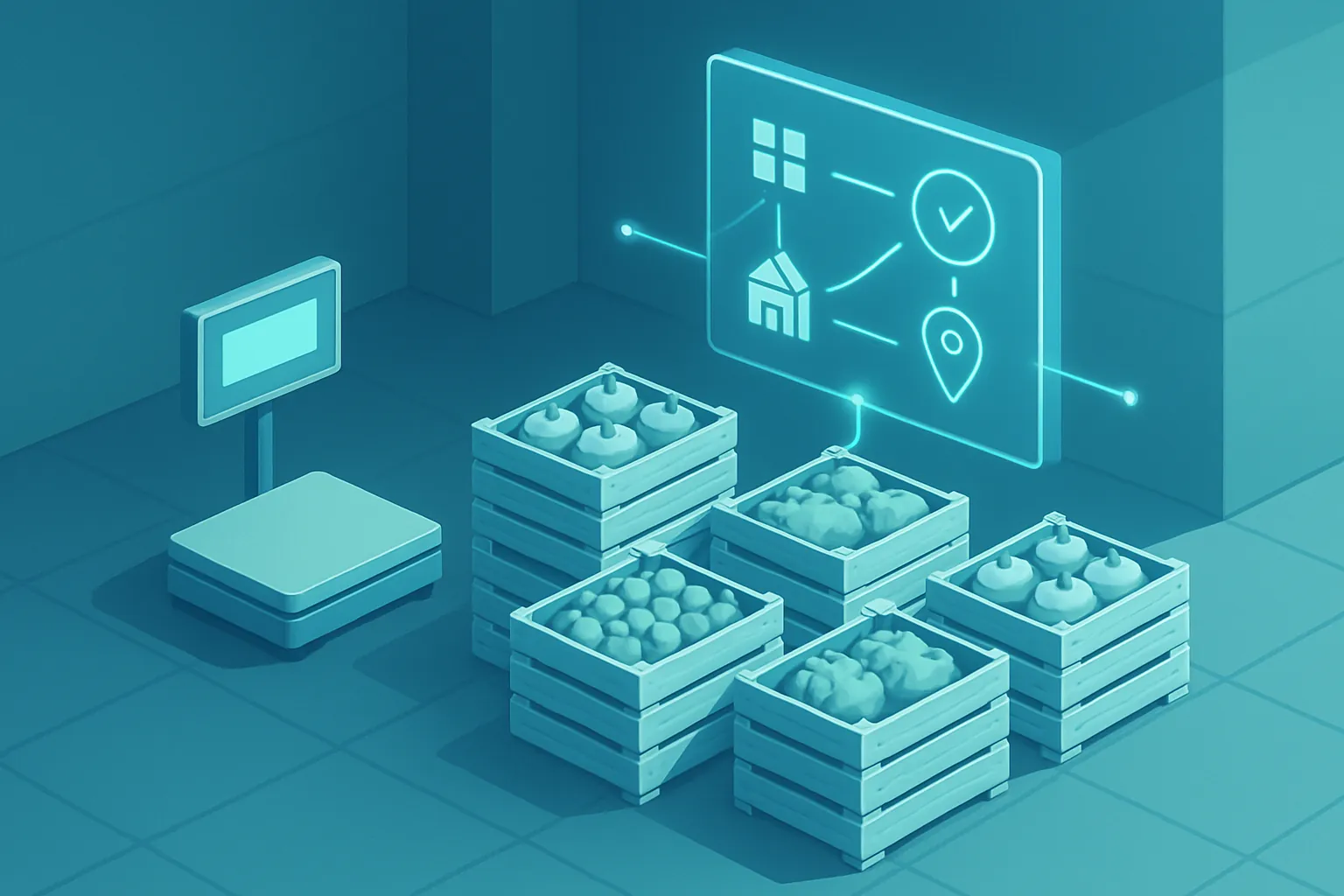
Every harvested unit stays linked to its plot of origin, harvest date, packing lot, and final destination. When a customer or an audit asks for a shipment’s full history, the report is generated in minutes instead of days — letting the business compete for export contracts or certifications that require that traceability as a baseline requirement, not a nice-to-have.
3. Input and finished-product inventory control
The system connects actual input consumption (fertilizer, agrochemicals, packaging) to the field activities that use it, and finished-product inventory to sales and shipments in progress. This makes it possible to:
- Buy inputs based on real consumption per cycle, instead of habit.
- Catch losses by stage (harvest, transport, packing) and act on the cause, not just log the loss.
- Know at any moment how much product is available by quality grade or size, without walking the warehouse.
4. A performance dashboard for management
A dashboard centralizes yield by plot, cost per hectare, losses by stage, and sales-contract fulfillment — information that today is usually pieced together by hand, weeks after it could have informed a timely decision.
5. Integration with scales, invoicing, and logistics
The system connects to what’s already running in the field and packing house: digital scales, electronic invoicing for domestic sales, export documentation, and carriers — removing the double-entry between systems that don’t talk to each other.
Why custom instead of a generic agricultural ERP
Generic agricultural platforms are usually built for a single crop type or a standard business model, charge per user or per registered hectare, and rarely adapt to a company’s specific packing, certification, or export processes.
A custom build:
- Adapts to the real crop and process of the business — produce, orchards, grain, or agro-industry — instead of forcing operations into a generic software mold.
- Integrates what you already use: scales, electronic invoicing, export documentation, and buyers’ systems.
- Grows with you: adding a plot, a packing line, or a new certification requirement doesn’t depend on a third party’s license plan.
- Removes recurring per-hectare or per-user fees, which end up costing more over time than building your own system.
How to get started
There’s no need to digitize the whole operation at once. The most effective path is:
- Map the current flow — from planting to sale or export — and identify where the most information or product gets lost.
- Prioritize the module with the highest impact (usually field records or traceability).
- Build and integrate incrementally, validating with field supervisors and packing managers before rolling it out across the whole operation.
An agribusiness that connects the field, the warehouse, and sales in a single system doesn’t just reduce losses: it gains the traceability and data that the best buyers and certifications now demand, and real visibility into which plots, varieties, and processes actually generate profit.
Is your agricultural operation still run on field notebooks and scattered spreadsheets? At Kimo Solutions, we design custom systems for agribusiness and agro-industry. Let’s talk about your operation.
Have a project in mind?
Get in touch →