
Custom School & Educational Institution Management Software: Admissions, Grades, and Billing in One System

Enrollment season at a mid-sized private school: the administrative coordinator has a Google Form to capture prospective students, a spreadsheet to track student files, a WhatsApp group per classroom for announcements to parents, and a separate billing system that doesn’t connect to any of it. When a parent calls to ask whether October’s tuition payment has been recorded, someone has to check three different systems to answer with certainty.
That’s still how many private schools, academies, and training centers operate: with disconnected tools that worked fine when the institution had 80 students, but become an operational bottleneck once it grows to several hundred enrolled students, multiple grades, or multiple campuses. The problem isn’t a lack of effort from administrative staff — it’s that no generic software was designed for the specific way your institution enrolls, grades, and bills.
The signs that spreadsheets and WhatsApp aren’t enough anymore
Almost no school decides overnight to build its own system. There comes a point where these situations are already part of daily operations:
- Enrollment stalls in paper and email. A prospective student fills out a form, but nobody automatically follows up on missing documents, and the process stagnates for weeks without anyone noticing in time.
- Grades live in spreadsheets that don’t talk to each other. Each teacher keeps their own gradebook, and putting together the final report card means copying and pasting numbers from half a dozen different files.
- Payments with no centralized visibility. The billing team can’t tell in real time who still owes tuition for the month without cross-checking the bank, the invoicing system, and a notebook.
- Fragmented parent communication. Important announcements get buried among personal messages in WhatsApp groups that nobody formally manages.
- Zero historical visibility. Finding out how many students dropped out last semester, or what the real delinquency rate was, requires building a report by hand that takes days.
Each tool looks sufficient on its own. Together, with no connection between them, they create rework, data-entry errors, and a confusing experience for both staff and parents.
Why generic platforms don’t solve the whole problem
Commercial education platforms exist, but almost all of them are built for a single use case: some only cover a virtual classroom, others only billing, others only attendance tracking. They rarely cover the full flow — enrollment, academic evaluation, billing, and communication — and when they try, they force your institution to adapt its own processes (admission requirements, report card format, payment policies) to the software’s rigid mold, instead of the other way around.
These platforms also tend to charge per active student with plans built for school networks with thousands of students, bundling modules for standardized testing or international integrations that a mid-sized Mexican institution will never use, while the actual specifics of your curriculum and payment policy stay outside their configuration options.
What a well-built school system includes
A custom system is designed around how your institution actually enrolls, grades, and bills — not around how a generic platform does it. In practice, this usually includes:
- Digital enrollment and student files, with automatic follow-up on missing documents and visible status for administrative staff, no more chasing paperwork.
- Centralized grade capture, where each teacher records evaluations directly in the system and report cards generate themselves, with no copying and pasting between files.
- Tuition and payment tracking, with real-time billing status, automatic reminders to parents with outstanding balances, and direct reconciliation against the bank.
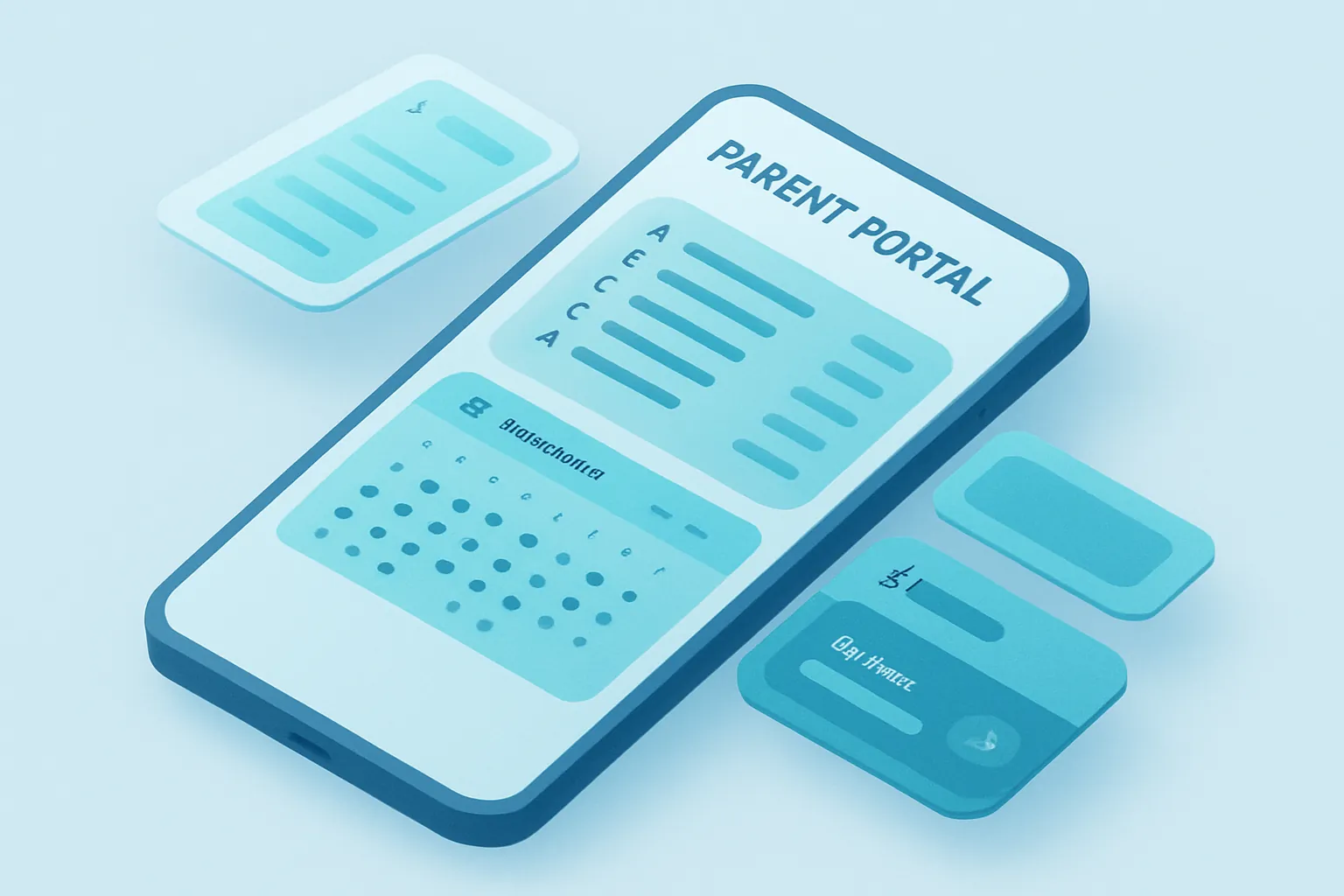
- A parent portal, where they can see grades, attendance, official announcements, and their account balance without depending on a WhatsApp group.
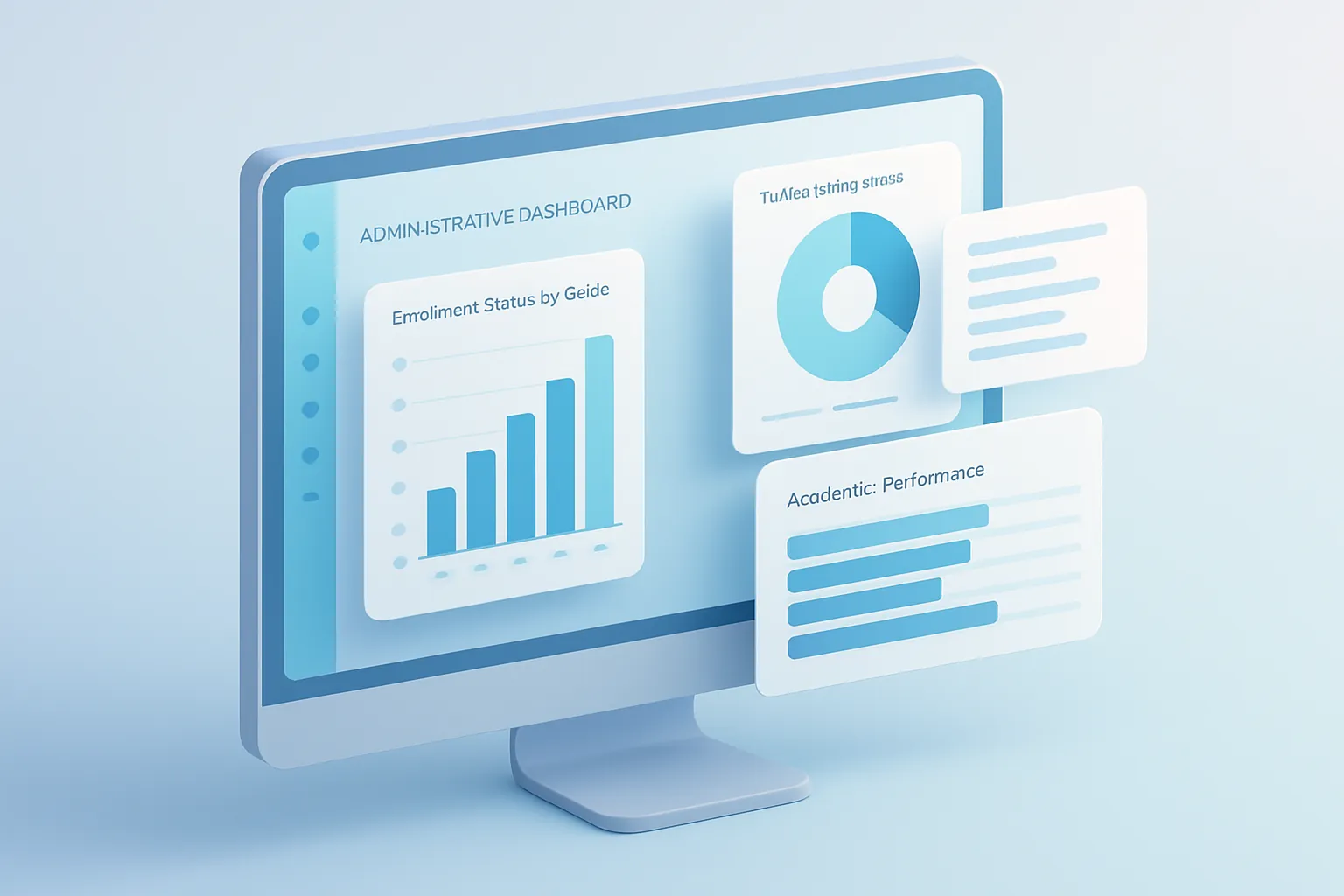
- Consolidated reporting, with enrollment, delinquency, and academic performance by grade or campus, generated instantly instead of assembled by hand each month.
- Scalable per campus, if the institution operates or plans to open more than one location, without duplicating administrative work at each one.
The return on investment, in concrete terms
The cost of running on disconnected tools doesn’t show up in a single line item — it’s spread across several:
- Fewer lost administrative hours, by eliminating manual data entry and copying between spreadsheets, WhatsApp, and the billing system.
- Lower delinquency, thanks to automatic payment reminders and real-time visibility into who still owes tuition.
- Enrollments that don’t stall, with automatic follow-up on missing documents instead of relying on someone remembering to follow up manually.
- Calmer parents, with a portal where they can check everything that used to require a call to the school office.
- Decisions based on real data, with enrollment and performance reports available instantly instead of built by hand every term.
For an institution with several hundred students across different grades, cleaning up this operation usually translates into fewer data-entry errors, fewer parent complaints about missing information, and an administrative team that stops losing hours to repetitive tasks.
How we approach it at Kimo Solutions
We don’t start from a generic education platform built for an international school network. We start by understanding how your institution actually enrolls, grades, and bills today — even if that currently lives spread across spreadsheets, WhatsApp, and a billing system that doesn’t connect to anything else. From there we design a system built around your real academic and administrative operation, starting with the module that solves the most urgent pain point — enrollment, grading, or billing — and growing in phases toward the parent portal and consolidated reporting.
The result is a system your administrative staff actually uses, because capturing and looking up information there is simpler than jumping between spreadsheets and WhatsApp groups.
If your institution still depends on disconnected tools for enrollment, grades, and billing, there’s a better way to run it. Let’s talk about your academic and administrative operation and figure out where to start.
Have a project in mind?
Get in touch →