
Custom Recruitment & ATS Software: How to Hire Faster Without Losing Candidates Along the Way
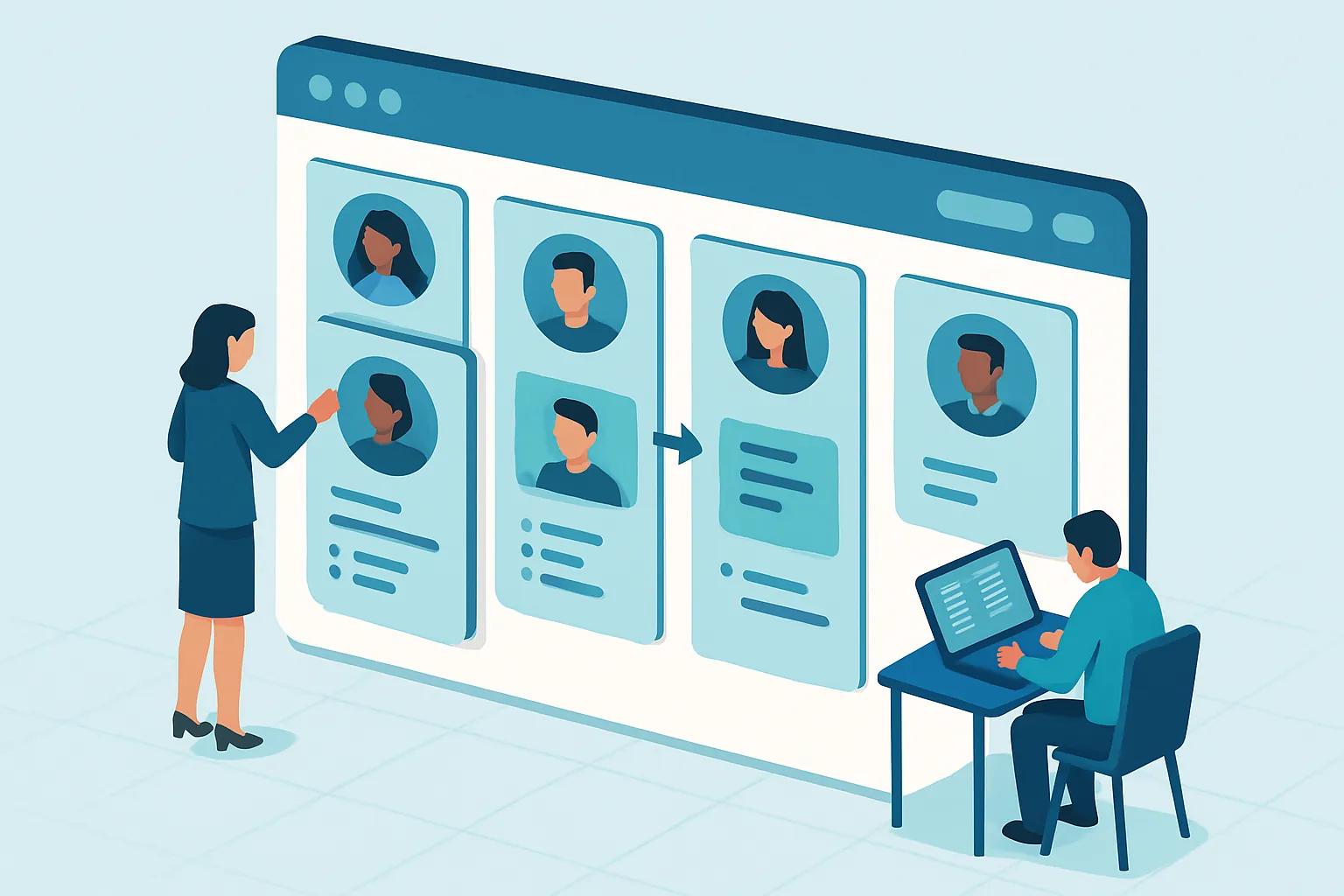
If your company hires with any regularity — because it’s growing, because operational roles turn over often, or because you have several open positions across different areas at once — you’ve probably already lived this scene: résumés arriving by email, WhatsApp, and different job boards, a spreadsheet someone updates “when they remember,” and a strong candidate who falls through the cracks because no one followed up in time.
The problem isn’t a shortage of candidates. It’s the lack of a process that organizes them, moves them through stages, and tells the right person when to act. That’s exactly what a custom ATS (Applicant Tracking System) solves: a candidate-tracking system built around how you actually recruit, not around a generic workflow that doesn’t fit your operation.
Signs your recruitment process needs order
Most companies that reach this point recognize several of these signs:
- Candidates falling through the cracks. One résumé arrives by email, another by WhatsApp, another through an online job board, and no one has a single list showing everyone’s status.
- Inconsistent follow-up. The recruiter remembers to follow up with some candidates and not others, simply because there’s no automatic reminder.
- Positions that take too long to fill. Without visibility into which stage each candidate is in, it’s hard to know where the process is actually stalling.
- Poor candidate experience. People apply and never hear back, which damages your company’s reputation as an employer.
- No institutional memory. When a candidate isn’t right this time but could be a great fit for another role in six months, nobody remembers because it was never recorded anywhere.
Each of these signs carries a real cost: critical positions left unfilled for weeks, HR team time lost to manual busywork, and strong candidates who end up accepting offers from competitors while your process is still “under review.”
Why an off-the-shelf ATS doesn’t always solve the problem
Generic recruitment platforms exist, and for standard processes they can be enough. Friction shows up when your company has its own rules: an interview process with different stages depending on the role, technical assessments specific to your industry, approvals that involve multiple department managers, or the need for a hired candidate to flow automatically into your payroll and HR system without re-entering their data.
When those rules don’t fit the generic tool, the team ends up running a “parallel” process in a spreadsheet for whatever the system doesn’t cover — which is exactly the problem you were trying to solve in the first place.
What a well-built ATS includes
A custom recruitment system is designed around your actual hiring process. In practice, this usually includes:
- A centralized job and candidate board, with each profile visually moving through stages: applied, interview, assessment, offer, hired.
- Unified candidate capture, regardless of whether they came from a job board, an internal referral, LinkedIn, or a direct email.
- Structured interview scorecards, so different interviewers evaluate against the same criteria and candidates can be compared objectively.
- Automatic reminders and alerts, so no candidate goes without follow-up for more than X days.
- A branded application portal or form, instead of relying entirely on third-party platforms.
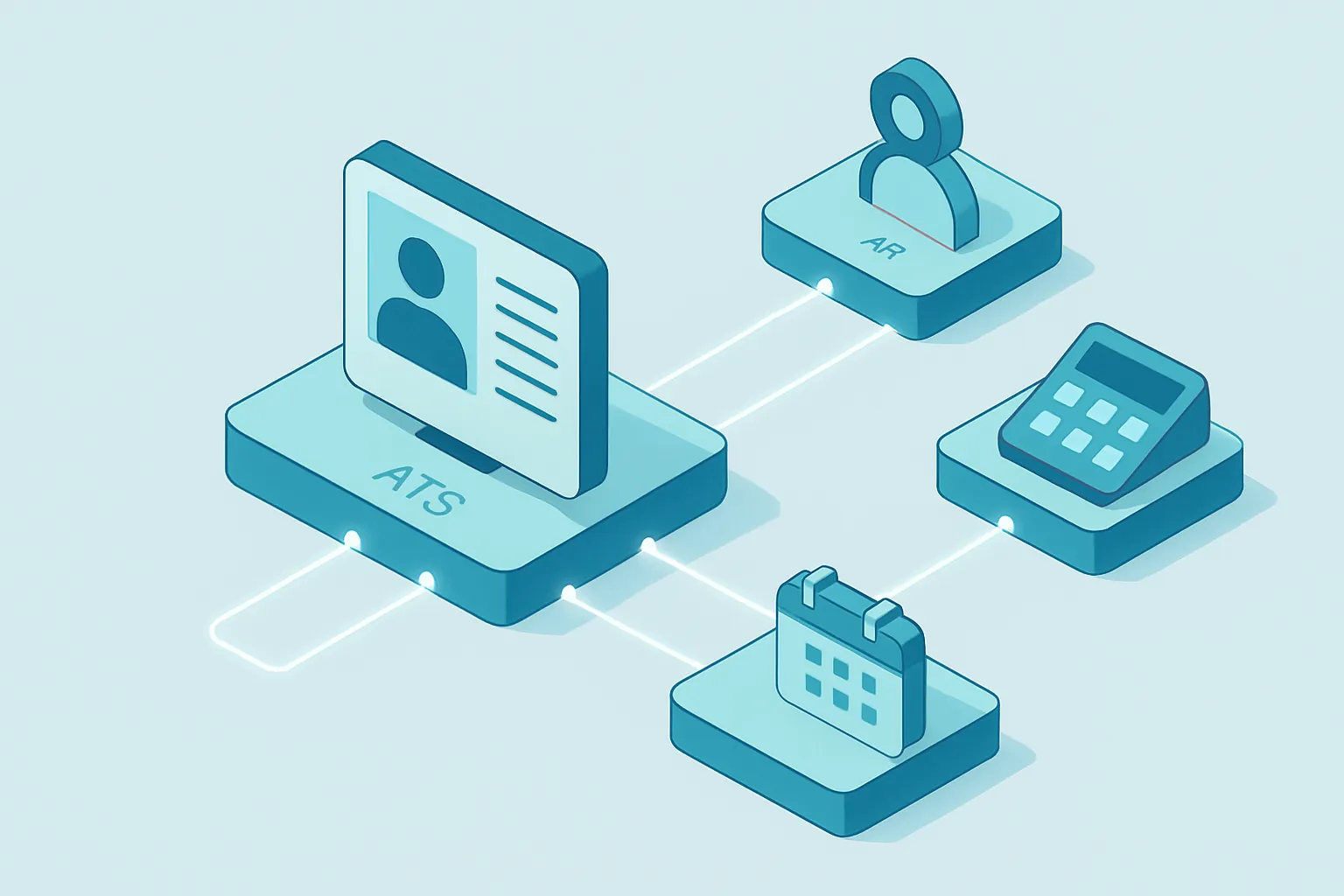
- A connection to your HR and payroll system, so a hired candidate becomes an employee without re-entering their data.

The impact shows up in hiring speed and quality
This is a project where the return can be measured with very concrete metrics:
- Fewer days to fill a position, by eliminating manual follow-up bottlenecks.
- Better hiring quality, because decisions are based on structured, comparable evaluations instead of memory or impression.
- Fewer candidates lost to slow response times.
- Fewer administrative hours spent moving résumés between emails, folders, and spreadsheets.
For a company opening 5 to 10 positions a month, cutting time-to-hire by just a few days translates into thousands of dollars in recovered productivity and operational roles filled on time.
How we approach it at Kimo Solutions
We don’t start with the technology — we start with your current hiring process: how many positions you fill per month, how many people are involved in interviews, what approvals are required, and what systems you already use (payroll, HR, corporate email) that the ATS needs to connect to. From there we design a custom workflow, starting with whatever causes the most friction today — typically the tracking board and automatic alerts — and expanding in phases toward scorecards, an application portal, and additional integrations.
The result is a system your HR team actually uses every day, because it’s built around how you recruit, not the other way around.
If your hiring process still depends on scattered emails, WhatsApp messages, and a spreadsheet nobody updates on time, there’s a better way to scale. Let’s talk about your hiring process and we’ll help you figure out where to start.
Have a project in mind?
Get in touch →