
Custom Real Estate Agency Software: Leads, Listings, and Closings in One System
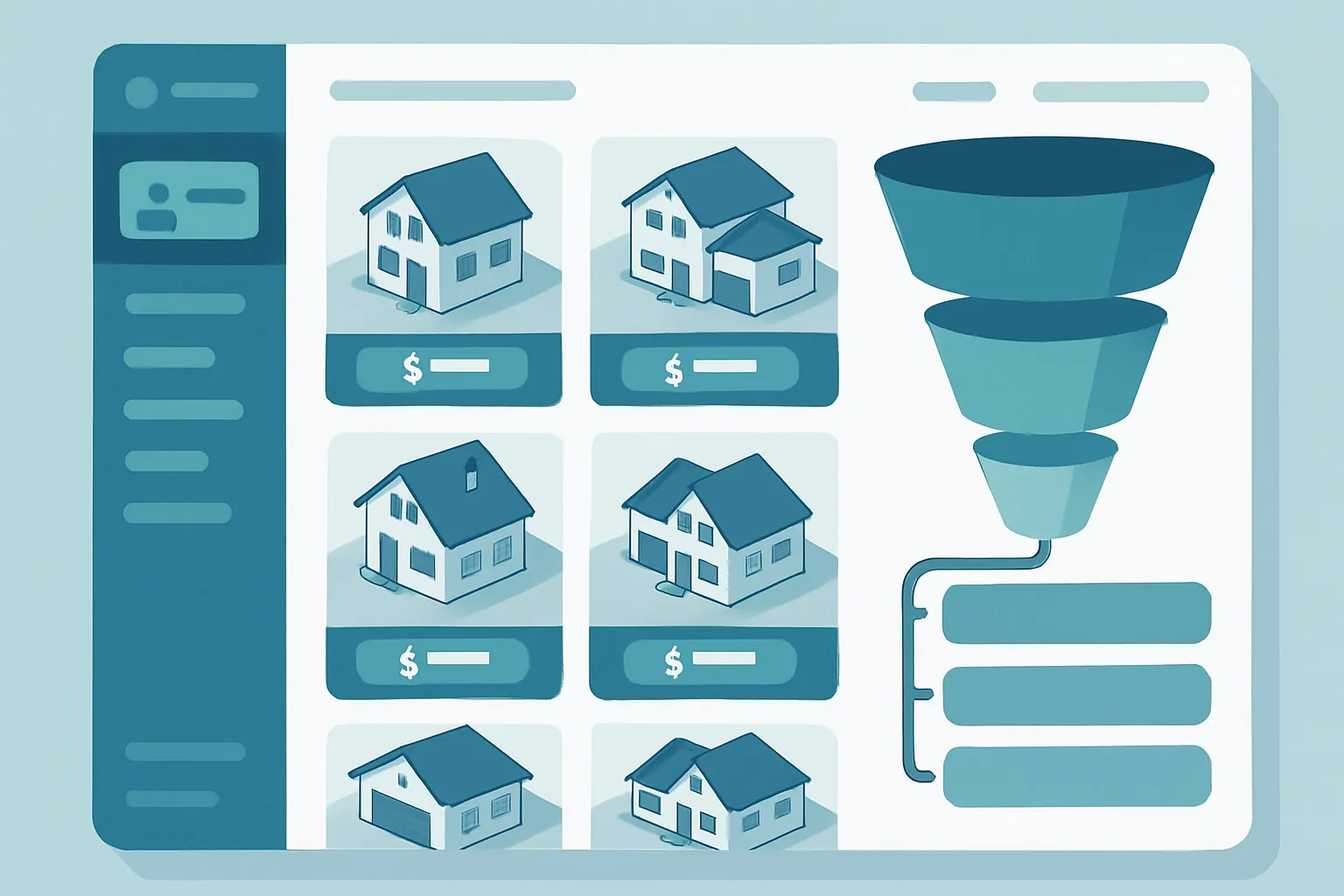
A real estate agency lives on two things: having the right properties and not letting the right leads go cold. In most agencies, though, both are handled manually and in scattered tools. Leads come in through WhatsApp, Facebook, Instagram, and listing portals, and each agent writes them down wherever they can — a notebook, a chat thread, a personal spreadsheet. The property inventory lives in yet another spreadsheet that someone has to update by hand every time a property sells, rents, or changes price.
The result is predictable: leads nobody follows up with again, properties still listed as available after they’ve already closed, and agents competing for the same client because nobody knows who was already talking to them. When a deal finally reaches closing, the file — ID documents, payment proof, contract, deposit — gets assembled by hand, with documents requested twice because they got lost in a WhatsApp thread.
A custom system centralizes the lead funnel, the property catalog, and the closing file in a single platform, so the agency stops running on memory and goodwill.
Where a sale is lost before it even starts
- Leads that go cold from lack of follow-up. Without a visible funnel, a lead who asked about a property on Monday might not hear back until Thursday — by then they’ve already decided with a competitor.
- Inventory out of sync across portals. A sold property keeps showing as available on Facebook, Instagram, or the listing portal, generating calls and messages about something that no longer exists — and burning the agency’s credibility.
- Agents competing for the same lead. Without clear assignment rules, two agents contact the same client through different channels, creating confusion and a poor first impression.
- Incomplete or duplicated closing files. Requesting the same document twice because it got lost in a chat delays signatures, deed transfer, and in the worst case makes the client walk away.
Each of these points translates directly into commissions that never get collected, not an abstract “organization” problem.
What a custom real estate system includes
1. Lead funnel with automatic follow-up
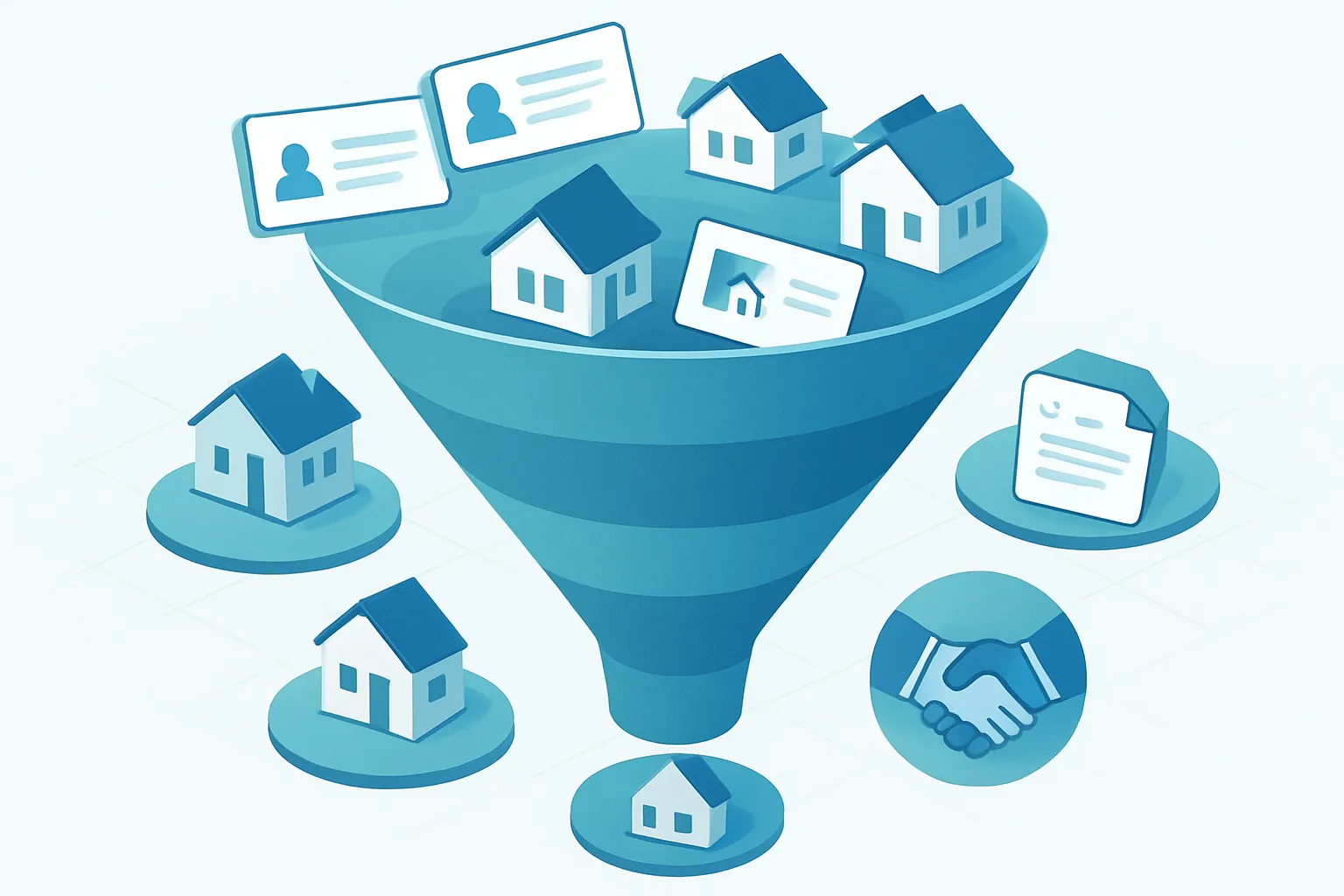
Every lead that comes in — via WhatsApp, portal, social media, or referral — enters a visible funnel with its current stage: initial contact, visit scheduled, proposal sent, in negotiation, closed. The system reminds each agent when to follow up and prevents a lead from going unanswered for days.
2. Synchronized property catalog
Inventory lives in one place: photos, price, status (available, on hold, sold, rented), and full spec sheet for every property. As soon as a property changes status, it’s reflected immediately across every channel where it’s published, with no one manually updating each portal.
- A single status that prevents advertising properties that are no longer available.
- Complete spec sheets (square footage, location, documents) accessible to any agent, not just the one who listed it.
- History for every property: visits held, offers received, price changes.
3. Clear lead assignment by agent
Assignment rules — by zone, property type, or shift — prevent two agents from contacting the same lead. Each agent sees their own pipeline, and the manager sees the whole team’s workload and performance from a single dashboard.

4. Digital closing file
Every closing — deposit, contract, payment proof, ID documents — is assembled in a single digital file, with a checklist of pending documents visible to both the agent and the client. Nothing gets requested twice because nothing gets lost in a chat.
5. Commission and performance dashboard
A dashboard shows closings per agent, average time to convert a lead into a closing, and commissions generated per period, so management makes decisions based on real data instead of end-of-month estimates.
Why custom instead of a generic CRM
Generic real estate CRMs charge per agent or per lead loaded, impose funnel stages that don’t always match the agency’s real sales process, and rarely integrate fully with listing portals or WhatsApp Business API.
A custom build:
- Reflects the agency’s actual process — residential, commercial, pre-sale, or resale — without forcing the workflow into a generic mold.
- Integrates with what you already use: WhatsApp Business API, the portals where you publish, and your invoicing system for commissions.
- Grows with you: adding an agent or a new line of business doesn’t depend on a per-user subscription plan.
- Eliminates recurring license fees, which cost more over the medium term than building your own system.
How to get started
You don’t need to digitize the entire operation at once. The most effective path is usually:
- Map the current process, from the moment a lead arrives to the moment a closing is signed, and identify where the most opportunities are lost.
- Prioritize the highest-impact module — almost always the lead funnel or the property catalog.
- Build and integrate incrementally, validating with agents before connecting every acquisition channel.
An agency that knows what stage every lead is in, which properties are truly available, and what’s still missing to close each file doesn’t just sell faster: it protects every commission that today gets lost to missed follow-up.
Is your agency still juggling leads and listings across WhatsApp, Excel, and disconnected portals? At Kimo Solutions we design custom systems for real estate agencies. Let’s talk about your operation.
Have a project in mind?
Get in touch →