
Custom Quality Management System (QMS): How to Automate Audits and Non-Conformances
When an ISO 9001 auditor asks for evidence of a corrective action from eight months ago, plenty of companies start to sweat. The information exists somewhere — a printed report, an Excel folder, an email from a supervisor who has since changed shifts — but reconstructing the full history of a non-conformance eats hours nobody budgeted for.
This isn’t just an audit problem. It’s a problem of actual product quality and customer trust, and it gets worse every time the company grows and adds lines, shifts, or plants.
How quality control quietly slips
The decline is rarely sudden. It builds up until these signs are just part of daily operations:
- Paper checklists filled out by hand, filed away, and rarely looked at again until something goes wrong.
- Non-conformances with no owner or deadline, reported in an email or a WhatsApp group that gets buried under other messages.
- Corrective actions that never officially close, because nobody has visibility into whether they were actually implemented or whether the issue came back.
- Quality metrics calculated by hand in spreadsheets, days or weeks behind what’s actually happening on the floor.
- Audits prepared at the last minute, scrambling together scattered evidence instead of having it ready at all times.
Each of these looks like a minor operational detail on its own. Together, they represent certifications at risk, recurring customer complaints, and production decisions made without reliable data.
Why spreadsheets and paper aren’t enough
A spreadsheet can log an inspection, but it can’t automatically flag when a non-conformance has gone three days without an owner, link a finished-product defect back to the raw-material lot that caused it, or show you in real time what percentage of inspections are coming out of spec.
Generic document management templates aren’t built for the specific quality cycle either: inspection, finding, root-cause analysis, corrective action, closure verification. You end up forcing your quality process into a system that wasn’t designed for it, or running a parallel system next to the same old paperwork.
What a well-built QMS includes
A custom quality management system is designed around how you actually produce and inspect on your floor, not a generic checklist. In practice, that usually includes:
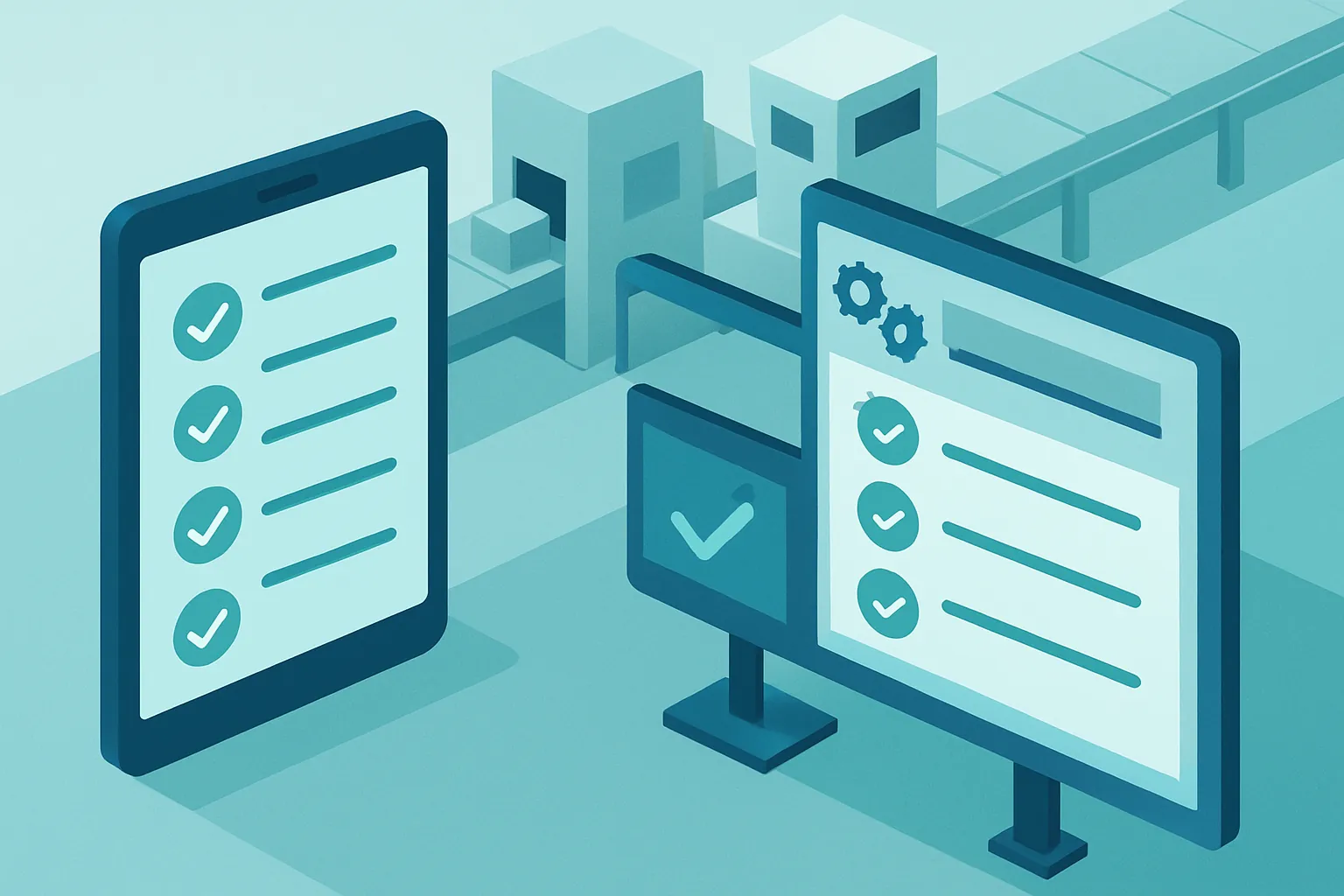
- Digital checklists captured from a tablet or phone right at the inspection point, with photos and signatures included.
- Non-conformance management with clear ownership and deadlines, with automatic escalation if a corrective action stalls.
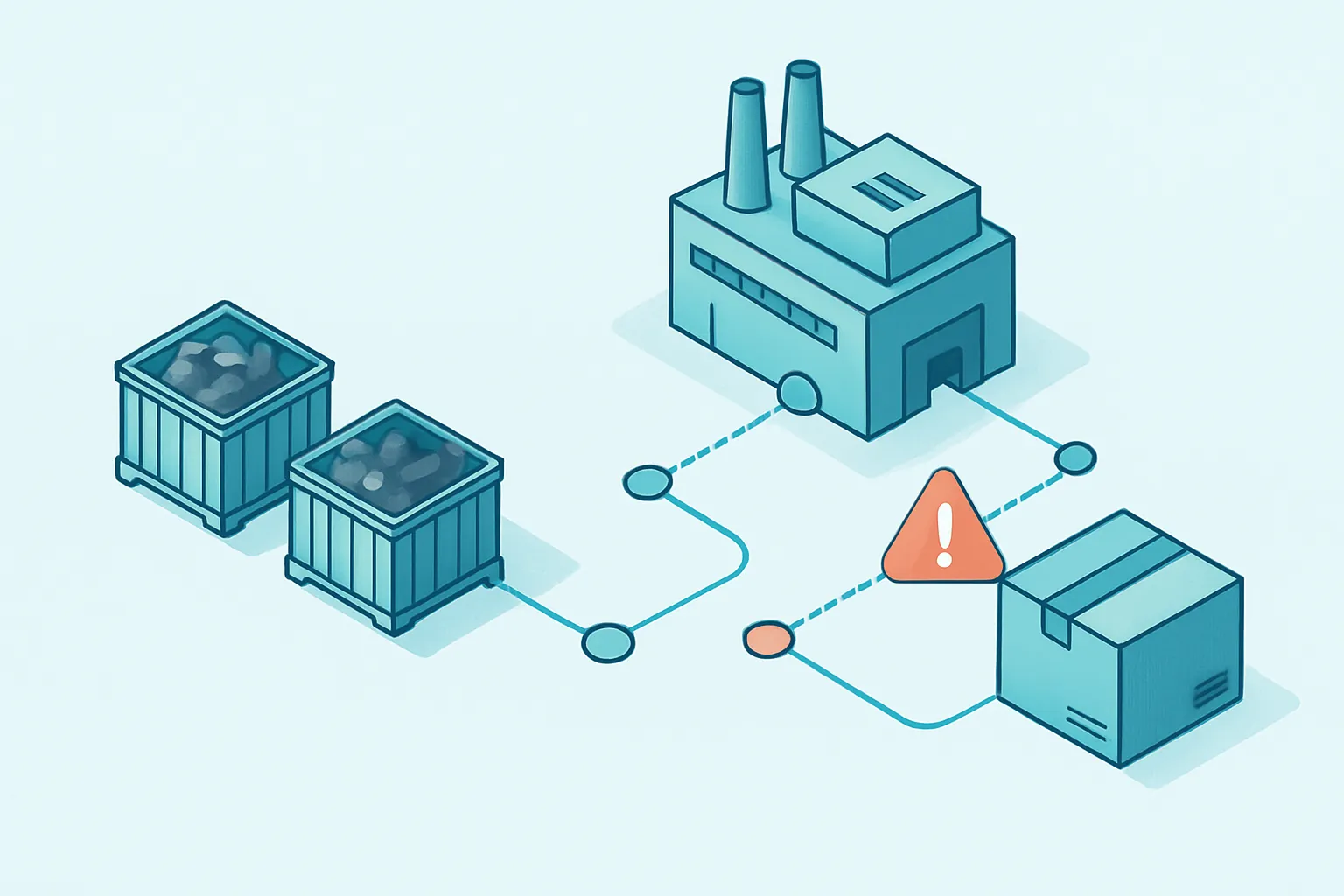
- Lot-to-lot traceability, to trace a defect back to its source — raw material, supplier, shift, or machine — in minutes instead of days.
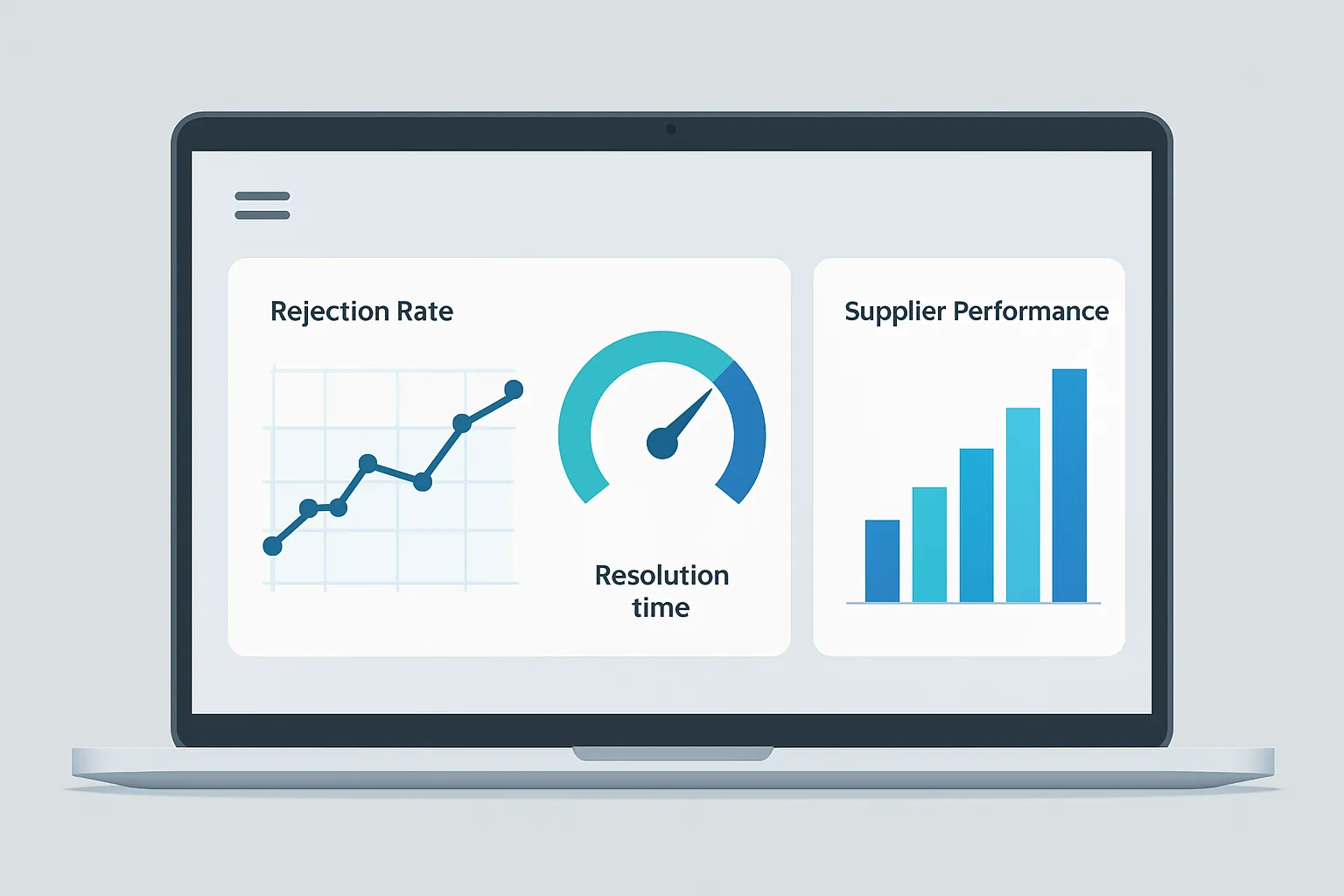
- Real-time quality dashboards, with metrics like rejection rate, non-conformance resolution time, and supplier performance.
- An always-audit-ready evidence repository, with a complete history of inspections, actions, and approvals.
- Automatic alerts when a quality metric drifts out of range, before it turns into a customer complaint.
The return on investment, in concrete terms
Quality is often treated as a cost center, but a well-implemented QMS tends to pay for itself in several ways:
- Fewer complaints and returns, by catching defects before product leaves the plant.
- Faster, less stressful audits, with evidence always on hand instead of reconstructed at the last minute.
- Shorter non-conformance resolution times, thanks to clear owners and deadlines instead of informal follow-up.
- Faster production decisions, with quality metrics visible the same day instead of weeks later.
- Protected certifications (ISO 9001, IATF 16949, and similar), which in many industries are a requirement to keep selling to certain customers.
For a plant running multiple shifts or lines, closing the quality loop faster typically saves, within a few months, the cost of a single rejected batch or a certification put at risk.
How we approach it at Kimo Solutions
We don’t start from a generic quality module. We start by understanding how you inspect today, which standards you must meet, who decides on a non-conformance, and what evidence each audit demands — even if that process currently lives across paper, spreadsheets, and the knowledge of a couple of key people. From there we design a system built around your standard and your production line, prioritizing the module that resolves the most urgent risk first — traceability, non-conformances, or audit evidence — and growing in phases toward real-time metrics and predictive analysis.
The result is a quality system your floor team actually uses, because capturing an inspection from the production floor is simpler than filling out a paper form someone later has to transcribe.
If your next audit still depends on reconstructing evidence at the last minute, there’s a better way to stay ready year-round. Let’s talk about your quality process and figure out where to start.
Have a project in mind?
Get in touch →