
Custom Inventory Management: Stop Losing Money to Stock Discrepancies
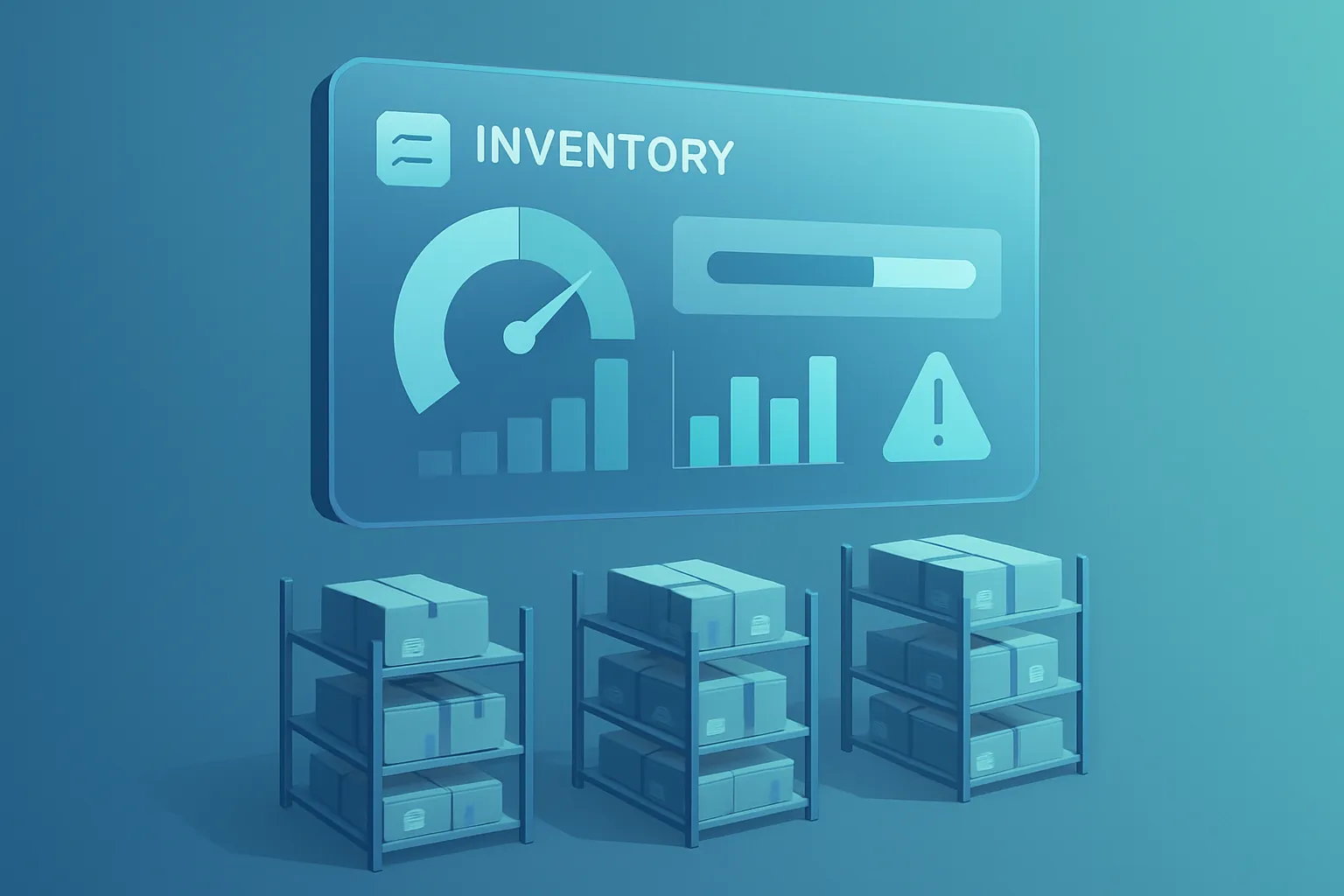
Uncomfortable question: if I asked you right now for the exact number of units you have of your best-selling product, how long would it take you to answer? If the answer is “let me check the spreadsheet” or “I’d have to call the warehouse,” this article is for you.
Inventory is one of the few places where a company loses money every single day without noticing. It doesn’t show up on the income statement as a line called “discrepancies,” but it’s there: product that was over-purchased, sales lost to stockouts, shrinkage nobody recorded, and hours of people counting boxes.
The real cost of uncontrolled inventory
When inventory lives in spreadsheets or in a system nobody updates on time, the symptoms are always the same:
- Chronic discrepancies: what the system says never matches what’s on the shelf, and every physical count turns into a negotiation.
- Blind purchasing: you over-order “just in case” (frozen capital) or under-order (lost sales and unhappy customers).
- Invisible shrinkage: expirations, damage and pilferage discovered months later, when there’s nothing left to do about it.
- Single-person dependency: only “the warehouse guy” knows where everything is, and when he’s out, the operation stalls.
Each of these problems looks small in isolation. Added up, in mid-sized companies they easily represent 2% to 8% of inventory value per year. On an inventory worth half a million dollars, that’s tens of thousands evaporating.
Why Excel (and many generic systems) fall short
Excel isn’t to blame: it’s an extraordinary tool for analysis, not for operations. The problem is structural:
- It doesn’t know who moved what, and when. Without traceability, discrepancies have no owner and no cause.
- It doesn’t warn you. A file won’t send an alert when a product drops below its reorder point.
- It doesn’t talk to your sales or purchasing: every department keeps its own version of the truth.
Generic inventory systems solve part of this, but they stumble on the reality of each operation: dual units of measure (you buy by the kilo, sell by the piece), lots and expiration dates, multiple warehouses or branches, consignment, serial numbers, raw-material transformation… When your operation doesn’t fit the system, people go back to a parallel spreadsheet, and chaos walks right back in through the side door.
What makes a custom inventory system different
A custom system is designed around how your merchandise actually moves, not the other way around. In the projects we build, these are the components with the highest impact:
Full movement traceability
Every receipt, issue, transfer and adjustment is recorded with user, date and reason. Discrepancies stop being a mystery: they become a report with a first and last name. This alone changes warehouse culture within weeks.
Real-time stock, from anywhere
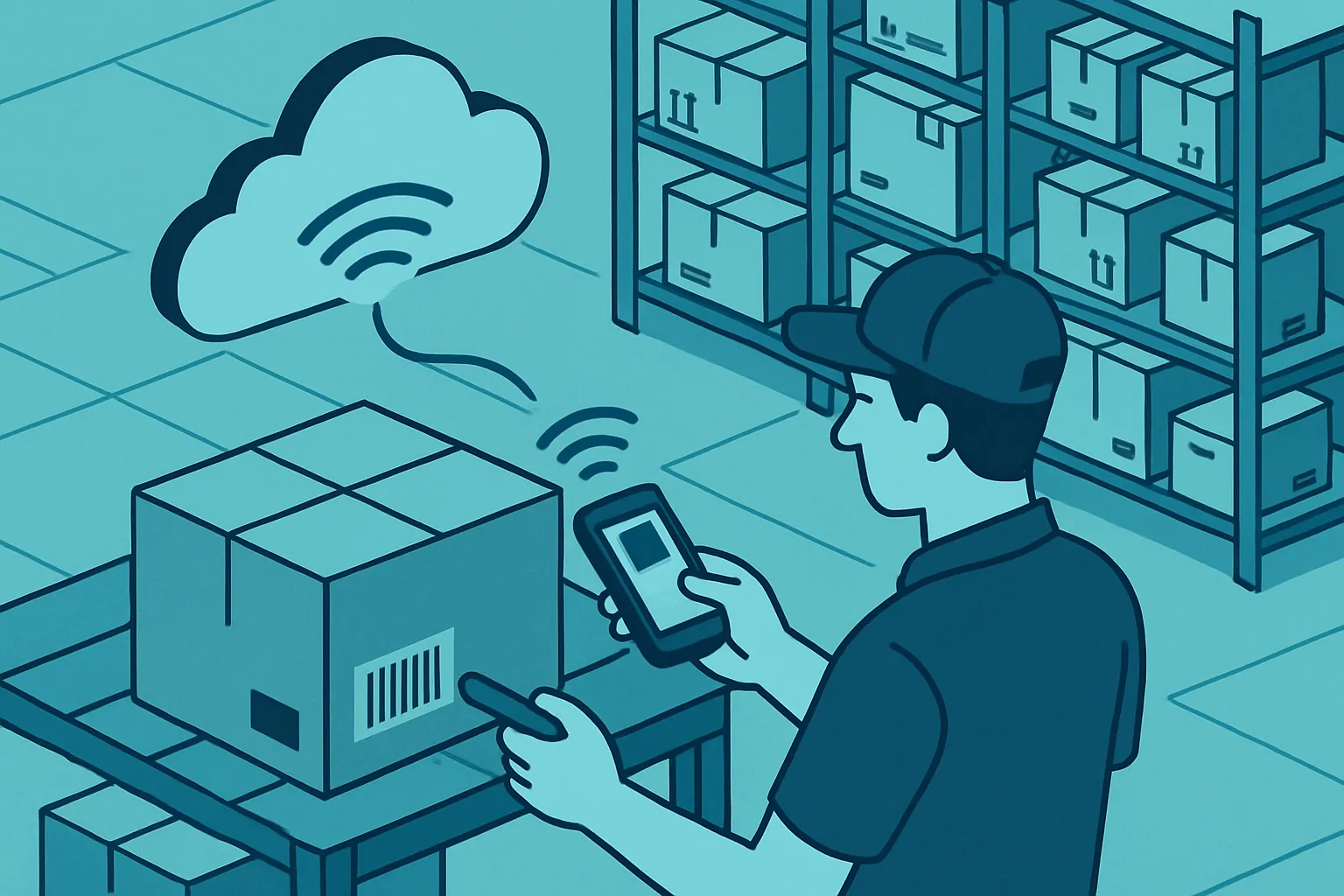
Sales quotes against real availability, management sees up-to-date inventory value, and the warehouse records movements from a phone or scanner the moment they happen — not at the end of the shift.
Smart alerts and reorder points
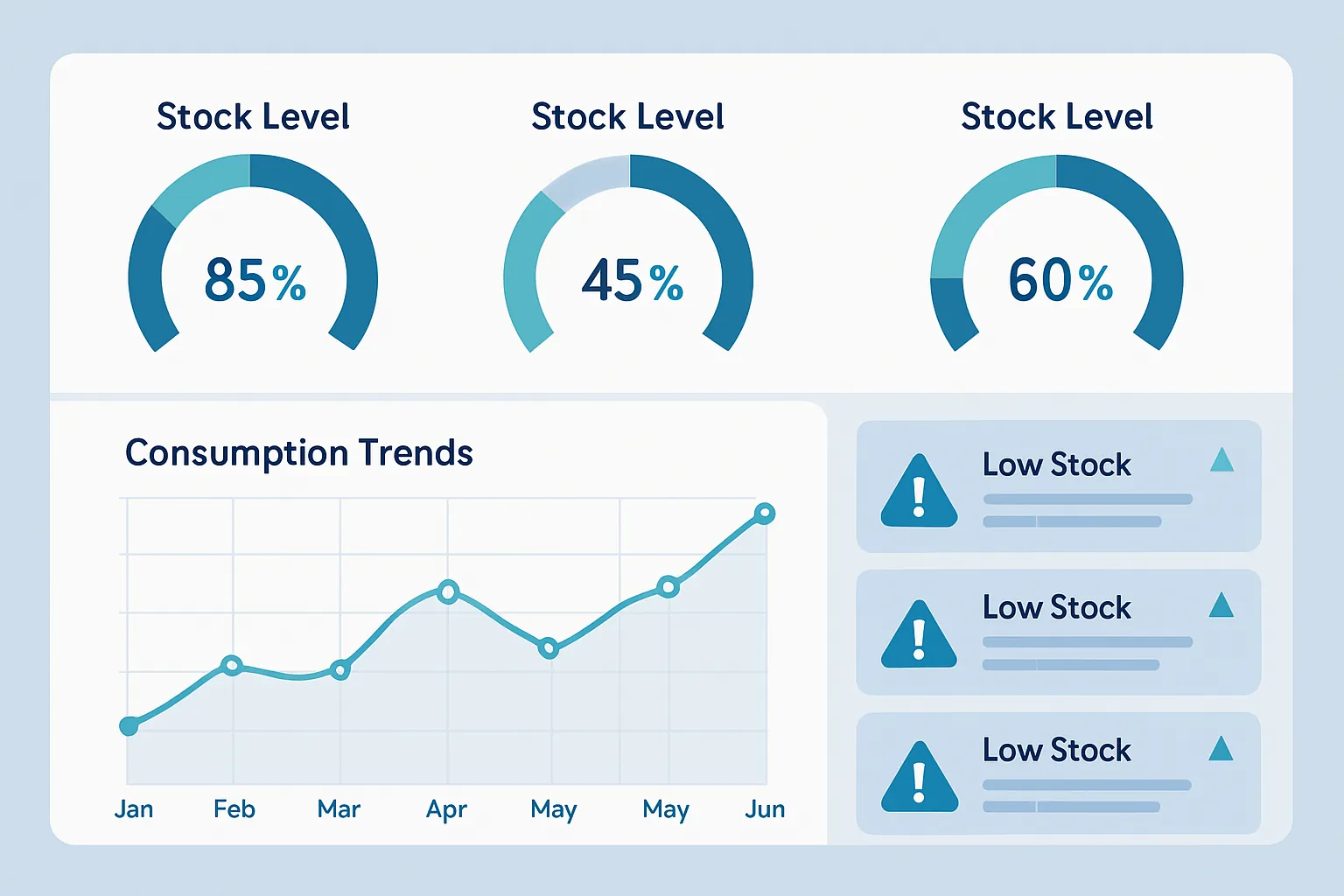
The system learns each product’s consumption rhythm and warns you before things break: “this SKU runs out in 12 days and your supplier takes 15 to deliver.” Purchasing stops being guesswork.
Integration with the rest of your operation
Inventory doesn’t live alone. A custom system connects to your invoicing, your point of sale, your e-commerce or your ERP, so that a sale deducts stock automatically and a received purchase increases it with no double data entry.
When is the investment justified?
Not every company needs custom development. Clear signs you’ve reached that point:
- You run frequent physical counts and there are always significant differences.
- You have more than one warehouse, branch or delivery truck carrying stock.
- Your operation has rules no off-the-shelf system models well (lots, expirations, serials, consignment, transformation).
- You already pay licenses for a system your team half-uses, supplemented by Excel.
The good news: an inventory project doesn’t have to be monumental. You can start with a focused MVP — reliable receipts, issues and stock levels — and grow in stages toward alerts, integrations and analytics. The payback tends to be among the fastest in business software, because it attacks money that’s already being lost.
The first step
Before thinking about screens, it’s worth mapping your real flow of goods: where it comes in, who touches it, where the information gets lost. That diagnosis — which at Kimo Solutions we run at the start of every project — almost always reveals quick wins before a single line of code is written.
If discrepancies, shrinkage or blind purchasing already cost you more than a system would, let’s talk. At Kimo Solutions we design inventory systems that adapt to your operation — not the other way around.
Have a project in mind?
Get in touch →