
Custom Contact Center Software: How to Unify Calls, Chats, and WhatsApp in One Dashboard
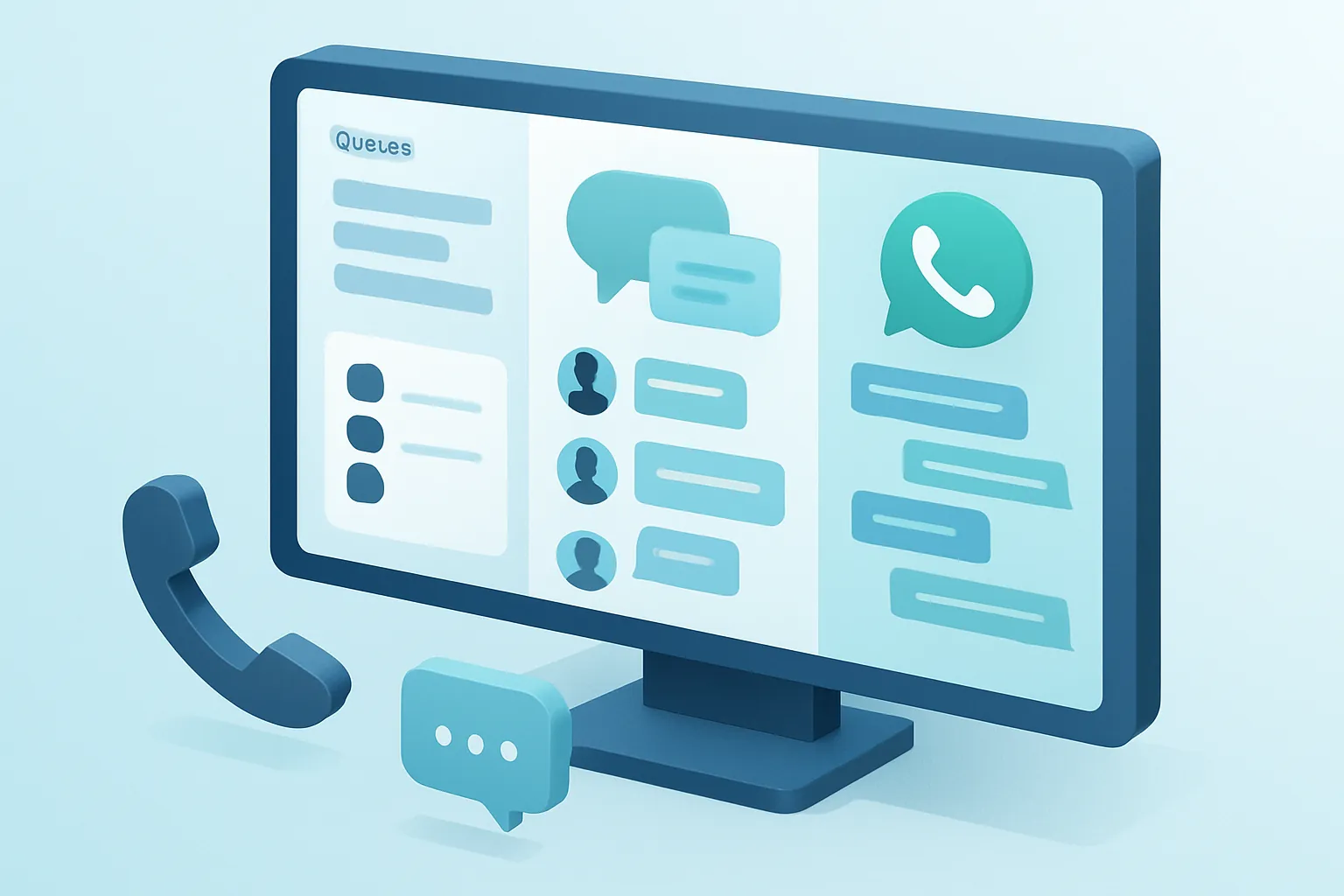
A customer calls and waits in a queue with no idea where they stand in line. Another messages on WhatsApp and doesn’t get a reply until the next day, because nobody checks that number outside sales hours. A third opens the website chat and their message gets buried among dozens of unassigned conversations. They’re the same kind of customer with the same kind of question, but each channel lives on its own island, and nobody in the company has a complete view of what’s actually happening.
That’s still how many customer service teams in Mexican companies operate after growing channel by channel: a phone line because there’s always been one, a WhatsApp Business number because customers asked for it, a website chat because marketing installed it. The result is response times that vary wildly by channel, agents who don’t know which conversations are still pending, and a customer experience that feels different — and worse — depending on where someone writes in.
The signs your channels can no longer run separately
The problem doesn’t show up on any single day. It builds until these situations are already part of normal operations:
- Nobody sees the full picture. A supervisor might know how many calls are in queue, but not how many WhatsApp chats have gone hours without a reply.
- The customer repeats their problem. They start on chat, get transferred to a call, and have to explain everything again because there’s no shared history between channels.
- Unmonitored spikes. One channel gets overwhelmed during peak hours while another sits idle, with no way to redistribute agents between them in real time.
- Metrics that don’t exist or don’t add up. Each channel has its own report — if it has one at all — and nobody can say with certainty what the real average response time is across the whole operation.
- Agents juggling multiple screens. One tab for WhatsApp Web, another for the website chat, and a completely separate application for the phone switchboard.
Each channel on its own might look under control. Together, with no coordination, they create a fragmented experience that the customer absolutely notices, even if the company never measures it.
Why separate per-channel apps aren’t enough
WhatsApp Business, an embedded website chat widget, and a traditional phone switchboard each handle their own channel well. But none of them was built to talk to the others: they don’t share customer history, they don’t balance workload across agents as a group, and they don’t produce a single performance metric for the whole operation.
Generic contact center platforms, for their part, tend to charge per agent and per enabled channel, with plans built for operations with hundreds of seats. You end up paying for complex IVR modules, call recording, or advanced routing your ten-agent team will never use, while the actual configuration of how you distribute and escalate conversations stays out of your control.
What a well-built contact center includes
A custom system is designed around the channels your company actually uses and how your team needs to distribute and escalate conversations. In practice, this usually includes:
- A unified inbox per customer, where calls, WhatsApp, website chat, and email converge into a single history, regardless of where the conversation started.
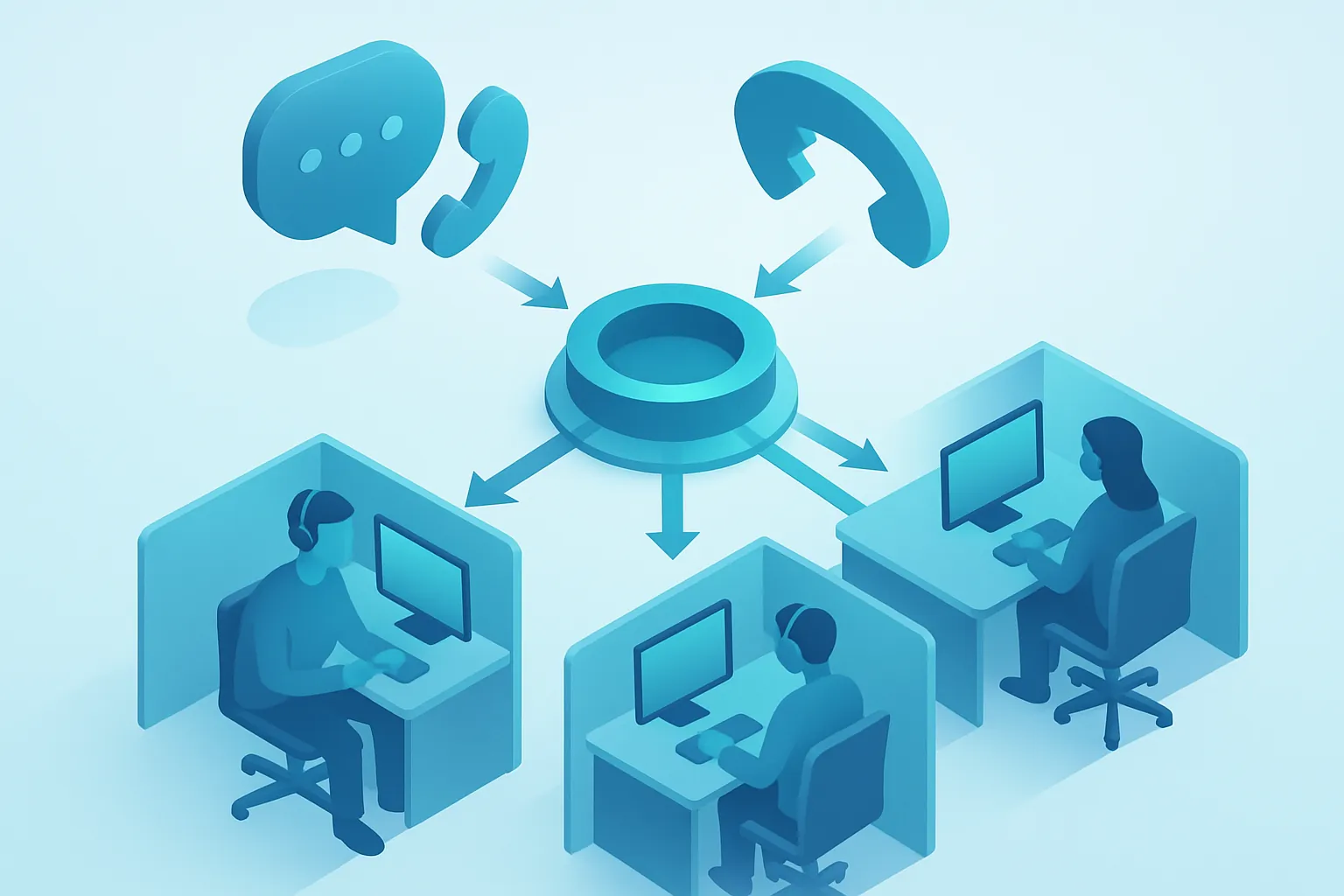
- Smart routing, that assigns each incoming conversation to the available agent with the right specialty, balancing load across channels in real time.
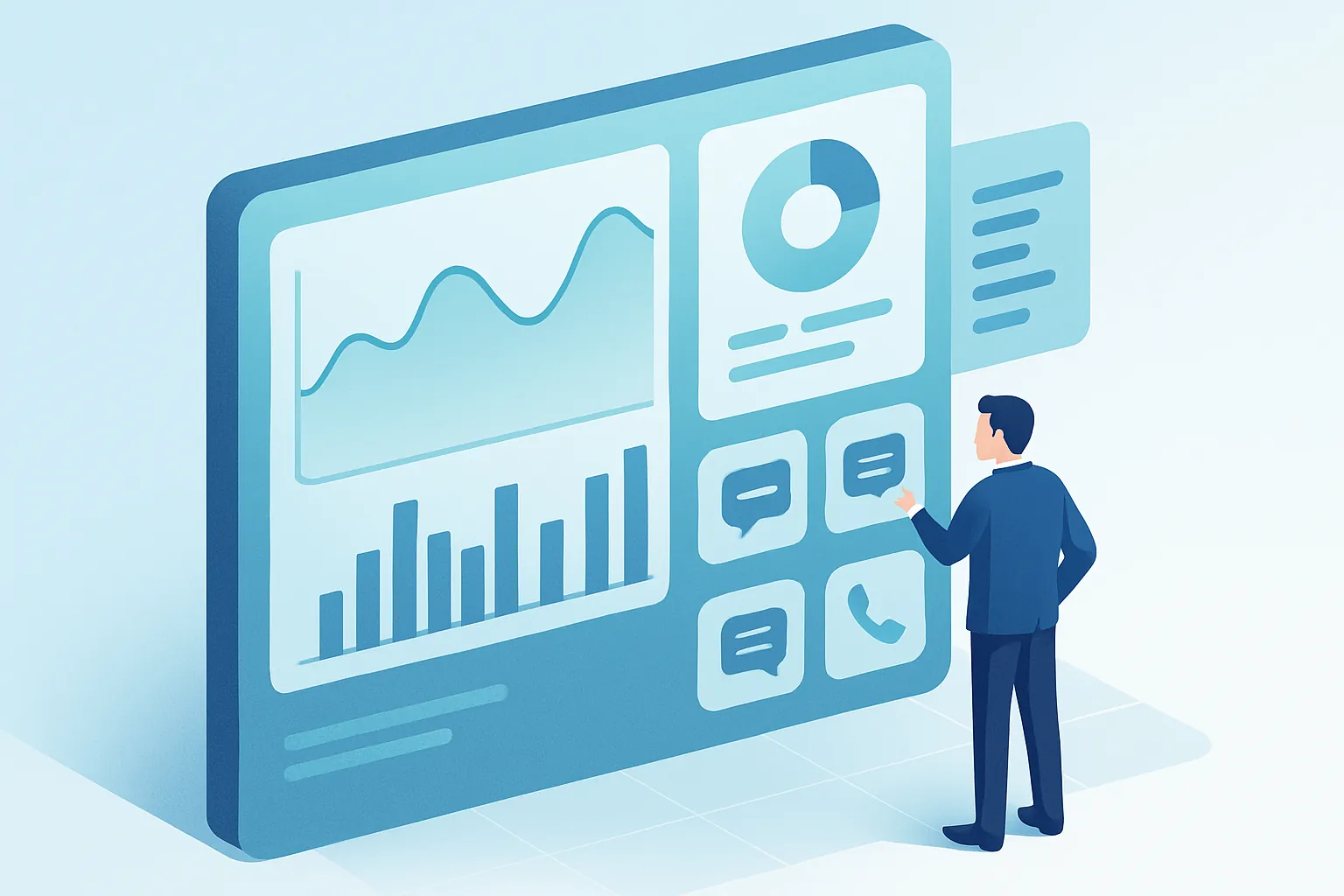
- A live supervisor dashboard, with the full queue across every channel, wait times, and alerts when a conversation has gone too long without a response.
- Persistent customer history, so any agent who picks up a conversation immediately sees the context of prior interactions, without asking the customer to repeat themselves.
- Consolidated reporting, with first response time, resolution time, and volume per channel in one place — not spread across five different spreadsheets.
- Frictionless escalation, to move a conversation from chat to a call — or the other way around — without losing history or making the customer wait again.
The return on investment, in concrete terms
The cost of running disconnected channels doesn’t show up in a single line item — it’s spread across several:
- Faster first response times, because routing distributes load across channels instead of letting one get overwhelmed while another sits idle.
- Fewer repeated conversations, thanks to shared history that keeps customers from explaining their problem more than once.
- Better use of your team, by seeing real workload on one dashboard and moving agents between channels based on actual demand.
- Decisions based on real data, with consolidated metrics for the whole operation instead of scattered, partial reports per channel.
- Customers who feel a consistent experience, whether they wrote on WhatsApp, called, or used the website chat.
For a company handling hundreds of conversations a month across several channels, cleaning up this operation usually translates into fewer complaints about wait times and a customer service team working with complete information instead of data silos.
How we approach it at Kimo Solutions
We don’t start from a generic contact center platform built for hundreds of seats. We start by understanding which channels your company actually uses today — calls, WhatsApp, website chat, email — and how your team distributes and escalates those conversations in practice, even if each channel currently lives in its own separate app. From there we design a system built around your real customer service operation, starting with the module that solves the most urgent pain point — a unified inbox, routing, or a supervisor dashboard — and growing in phases toward consolidated reporting and cross-channel escalation.
The result is a contact center your team actually uses, because finding and resolving a conversation there is simpler than jumping between tabs and apps.
If your customer service team still doesn’t have a full view of what’s happening across every channel, there’s a better way to run it. Let’s talk about your customer service operation and figure out where to start.
Have a project in mind?
Get in touch →