
Custom Collections Software: How to Reduce Past-Due Accounts Without Overloading Your Team
Almost no company struggles as much with selling as it does with actually getting paid for what it already sold. The invoice went out, the customer received the product or service, and yet the cash takes weeks — sometimes months — to arrive, while someone in admin scrolls through a spreadsheet by hand to figure out who owes what, and since when.
The cost isn’t just the cash sitting still. Without a clear process, collections becomes reactive: customers get contacted once they’re already deep in arrears, not the moment a due date passes; sales reps take a new order without knowing whether that customer is even current on their account; and nobody has a real picture of past-due receivables until finance pulls one together for month-end close.
Custom collections software exists to turn that reactive process into one that gets ahead of due dates, prioritizes who to contact first, and keeps a record of every follow-up — instead of relying on one person’s memory.
The signs your collections process is already costing you money
This problem rarely shows up all at once. It builds until several of these signs appear together:
- Manual reminders by chat or phone call, dependent on someone remembering to send them that day.
- Past-due balances growing unnoticed, because the aging report gets built by hand and arrives too late.
- Sales reps taking new orders from delinquent accounts, because they have no visibility into account status at the moment of sale.
- Collection follow-ups with no record, so if the person handling collections is out, the history of payment promises and agreements disappears with them.
- Early-payment discounts or late fees nobody applies, because calculating them by hand is slow and they get skipped.
Each of these signs represents cash the company already earned through sales that takes longer than it should to become money it can actually operate with.
Why spreadsheets and manual reminders don’t cut it
A spreadsheet can hold a list of invoices, but it can’t flag on its own when one is about to come due, automatically prioritize the highest-risk accounts, or sync with your billing system to stay current in real time. Generic CRMs, for their part, track sales opportunities, not collection follow-ups with their own rules: your credit terms, your escalation thresholds by days past due, or the way sales and collections need to share the same account information.
The result, again, is a process that lives half in the accounting system and half in whoever’s handling collections that week.
What a well-built collections system includes
A custom system is designed around your actual credit terms and how your team really collects. In practice, that usually means:
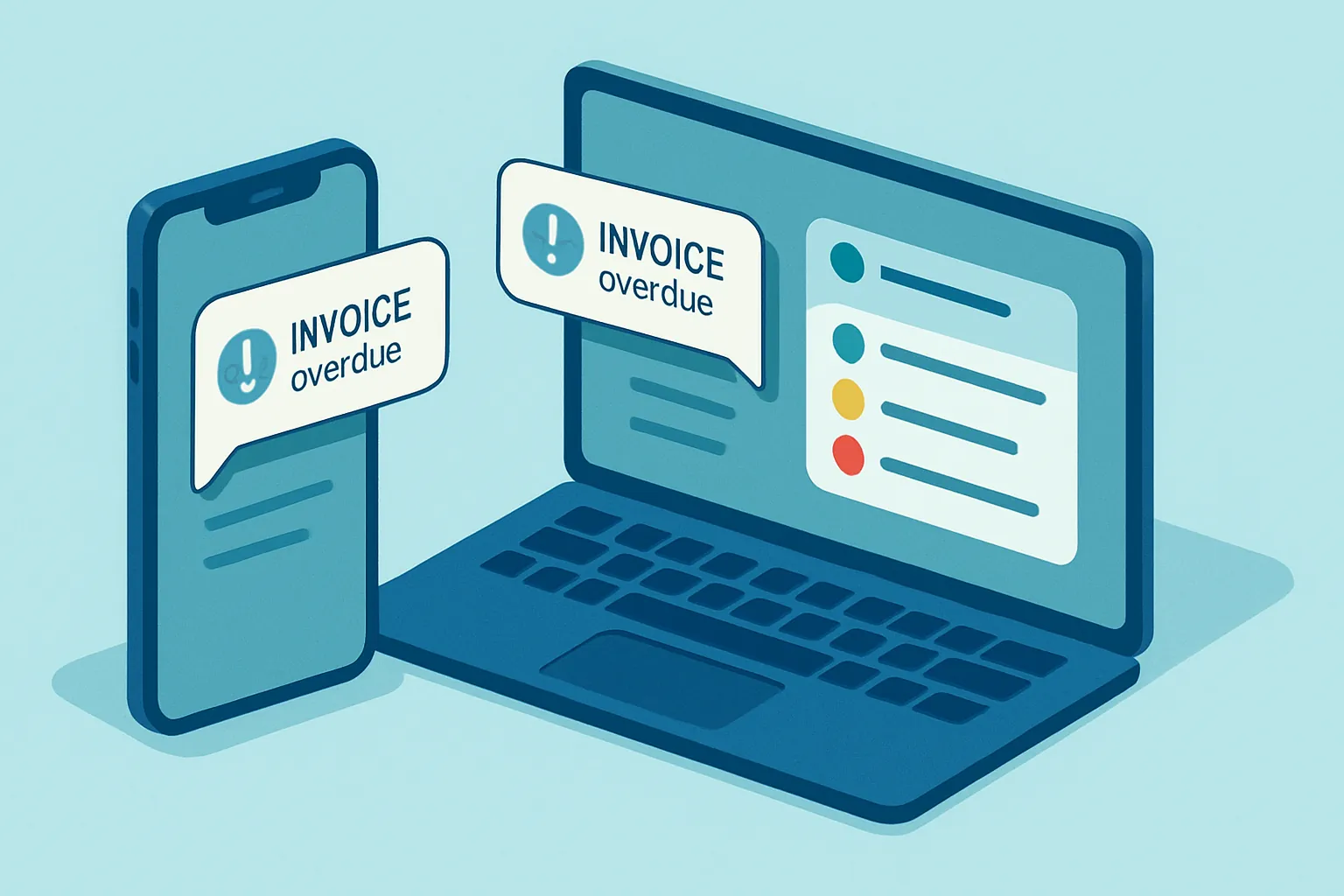
- Automatic reminders before and after the due date, by email or chat, with no one having to remember to send them.
- Risk-based prioritization, surfacing customers with the largest past-due balance or the worst payment history first.
- Account status visible to sales, so reps stop taking new orders from customers outside their credit terms.
- A follow-up history per customer, with every call, payment promise, and agreement logged and available to the whole team.
- Automatic calculation of late fees or early-payment discounts, applied according to your own credit policy.
- Integration with your billing system, so payment status updates itself, with no double entry.
The return on investment, in concrete numbers
Collections is one of those projects where the return is felt almost immediately, because it touches money the company already earned and only needs to recover faster:
- Lower days sales outstanding (DSO), thanks to reminders that go out before an account falls far behind.
- Better cash flow, by converting sales into usable cash in less time.
- Fewer orders shipped to delinquent accounts, because sales can see real account status before selling.
- Late fees and interest actually collected, instead of being skipped for lack of automatic calculation.
- Fewer admin hours spent building aging reports by hand.
For a company with a mid-sized customer base, shaving just a few days off the collection cycle usually frees up more working capital than a line of credit — without the financing cost of borrowing it.
How we approach it at Kimo Solutions
We don’t start by asking which collections software you want. We start by asking how you actually collect today: your real credit terms, who follows up with which customer, and at what point control slips away — even if today it lives in a spreadsheet or in the memory of whoever handles collections. From there we design a system built around your credit and collections policy, starting with the segment of receivables holding back the most cash and growing in phases toward automatic reminders, risk-based prioritization, and full visibility for sales and finance alike.
The result is a collections process your team actually follows because it saves them work, and one your finance leadership trusts because every dollar owed has a date, an owner, and a logged follow-up.
If your company is still collecting by hand and finding out about past-due accounts at month-end close, there’s a better way to control it. Let’s talk about your collections process and figure out where to start.
Have a project in mind?
Get in touch →