
Custom Car Dealership Software: Inventory, Sales, and Financing in One System
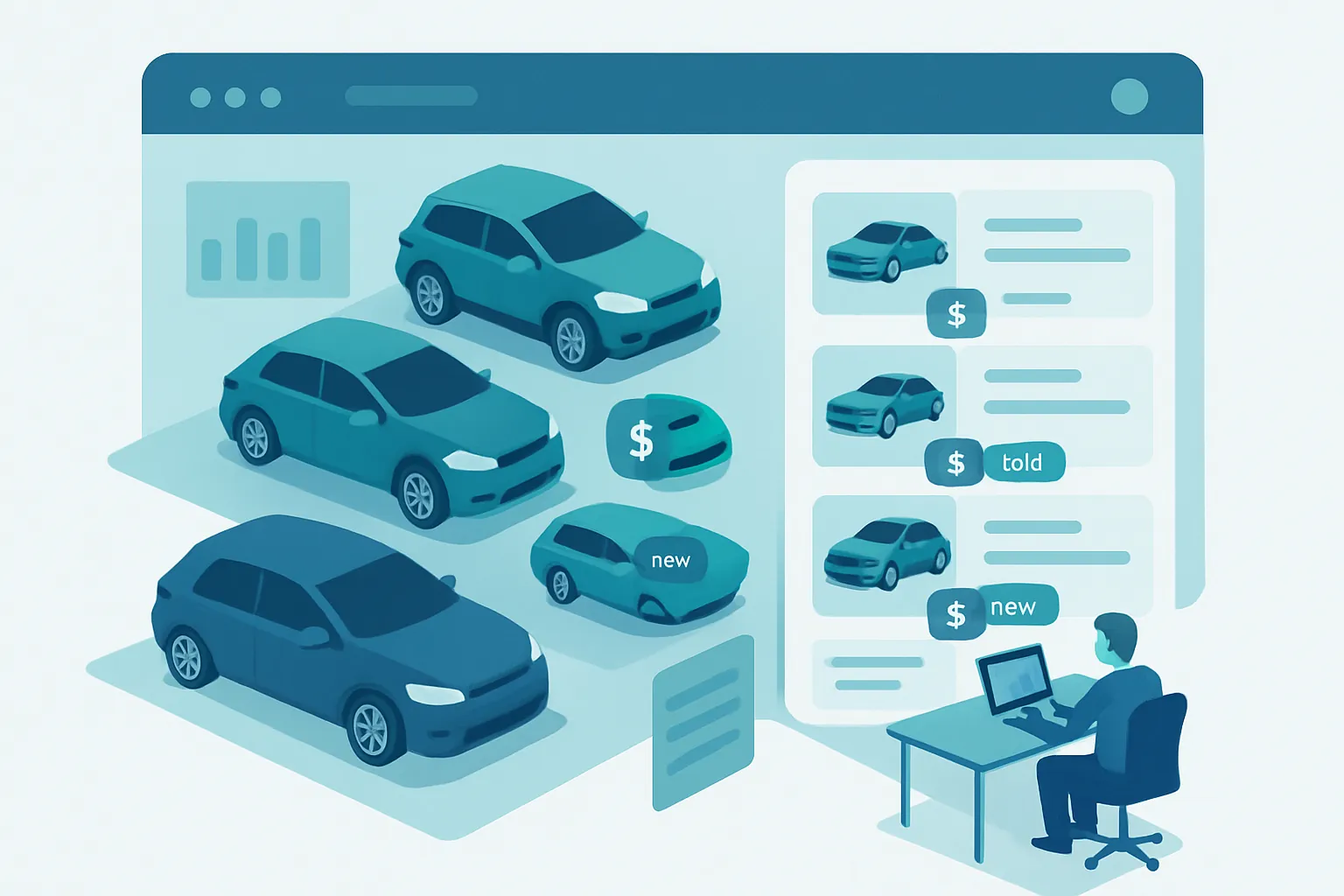
A car dealership sells an expensive, infrequent product: the average customer doesn’t buy a car every month, so every lead that walks onto the lot or messages on WhatsApp is worth far more than it looks at first glance. And yet, in most dealerships — from the independent lot to the multi-location group — that lead is tracked with a spreadsheet, notes on a salesperson’s phone, and an inventory whiteboard that never quite matches what’s actually on the lot.
The result is predictable: a customer asks about a model that already sold, a salesperson loses track of a hot lead because they went on vacation, and the manager has no idea how many units are really available until someone walks the lot and counts. In a business where the margin per unit is already thin, every lost lead or every “ghost” car still showing in the system costs the dealership real money.
A custom system fixes this by connecting vehicle inventory, lead tracking (CRM), and the financing process on a single platform, from the moment a car arrives on the lot to the moment the customer drives it away.
Where the sale gets lost
- Inventory out of sync between the lot, the website, and listing portals. A car that already sold still shows as available, and a customer drives to the dealership for a vehicle that no longer exists.
- Leads with no systematic follow-up. A customer who asked about a model two weeks ago and never got a callback, because the salesperson who took the lead doesn’t remember or moved to a different shift.
- Incomplete or duplicate financing files. Documents requested twice because there’s no record of what the customer already submitted, and applications that stall with no one sure which step they’re stuck on.
- No visibility into which salesperson, model, or channel actually drives sales. Without centralized data, decisions about inventory buying and ad spend get made by gut feel.
Each of these points stretches out the sales cycle and reduces how many units the dealership moves per month — the single biggest driver of profitability in the business.
What a custom dealership system includes
1. Real-time vehicle inventory
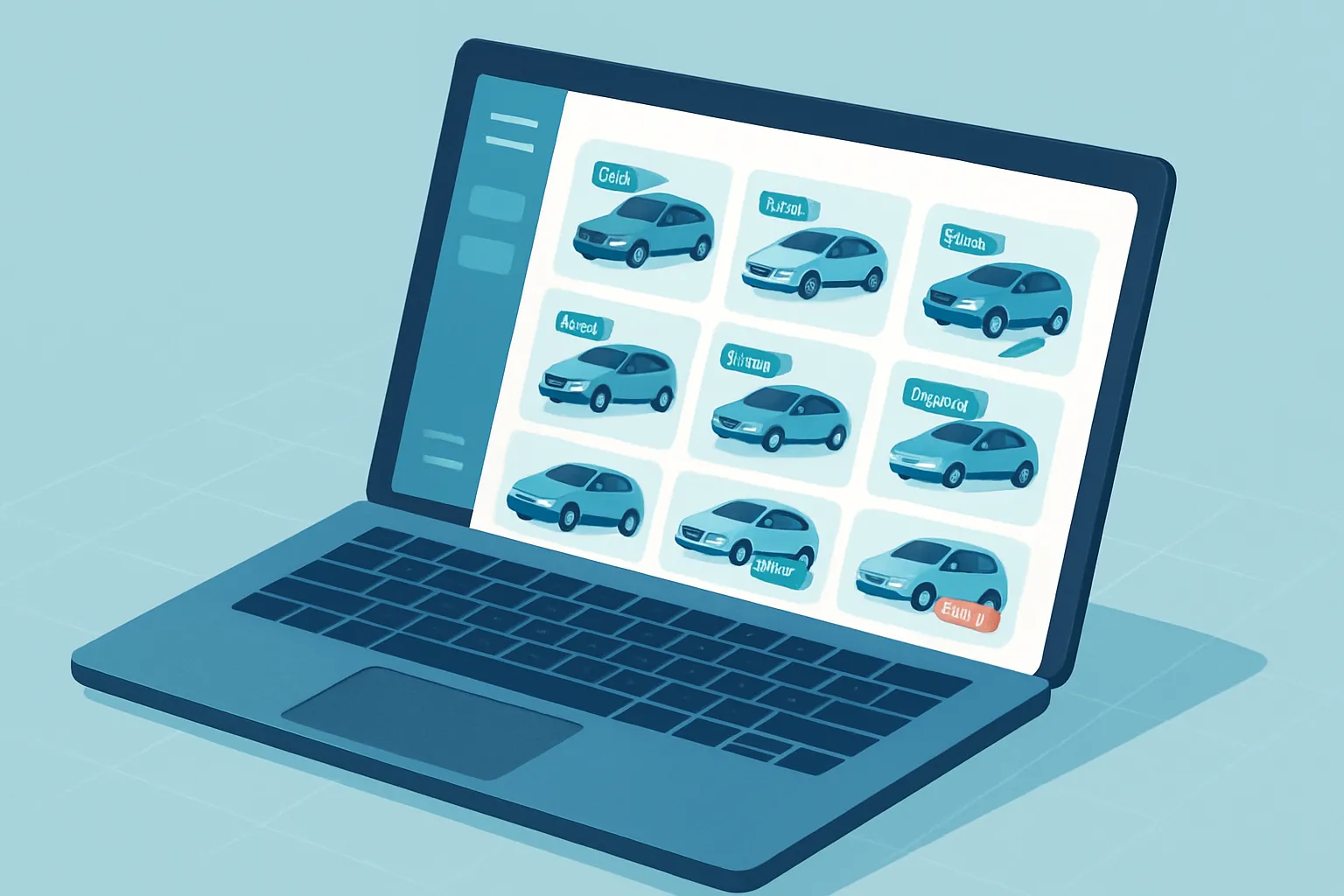
Every unit — new or pre-owned — lives in a single record with photos, specs, cost, list price, and status (available, on hold, in financing, sold). That same record automatically feeds the website and listing portals, so there’s never a “sold” car still showing online.
2. Lead CRM with automatic follow-up
Every lead — whether it comes from the showroom, WhatsApp, a phone call, or a listing portal — enters a pipeline visible to the whole sales team. This makes it possible to:
- Automatically assign every new lead to the salesperson on duty, so no one goes unattended.
- Schedule follow-up reminders so a hot lead never goes cold for lack of a call.
- See in one place which models generate the most interest and which salespeople close fastest.
3. Financing and paperwork without duplicate work
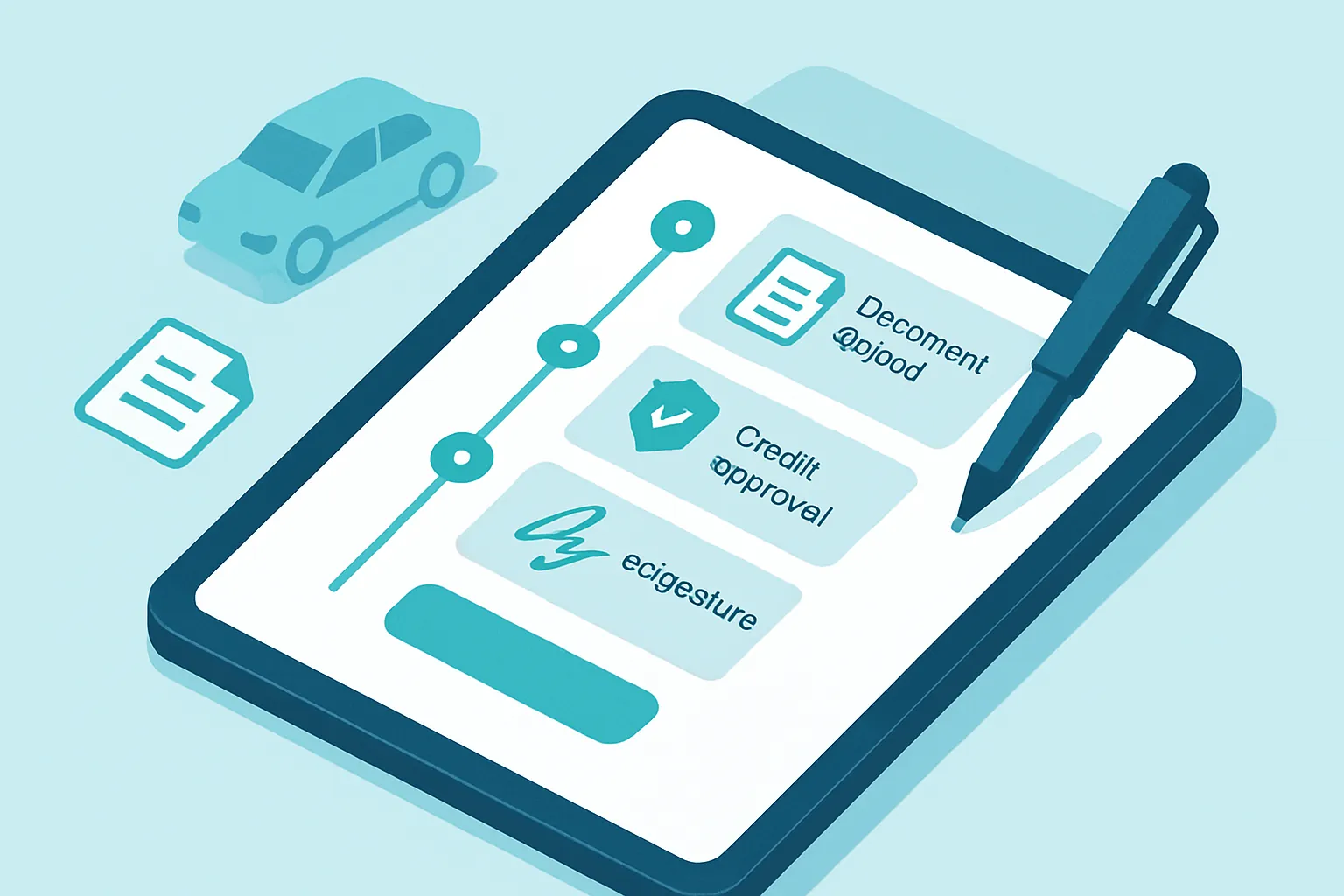
The customer uploads their documentation once from their phone, and the application moves through the financing stages (quote, credit approval, signing, delivery) with status visible to both the customer and the dealership team.
4. Customer and vehicle history
Every customer builds up a history of purchases, service visits, and preferences, making it easier to offer a trade-in at the right moment or invite them in for maintenance without starting from zero every time they contact the dealership.
5. A dashboard for the sales manager
A dashboard shows available units by model, active leads per salesperson, average time to close, and profitability per unit — information that today usually lives only in the manager’s head or scattered across several spreadsheets.
Why custom instead of generic dealership software
Generic dealership platforms charge per user or per inventory unit, force you to operate on their own workflow, and rarely integrate with lender systems or local electronic invoicing.
A custom build:
- Adapts to your real operation — a single-brand dealership, a multi-brand lot, or a group with several locations — instead of forcing your process into someone else’s mold.
- Integrates what you already use: the WhatsApp Business API, listing portals, electronic invoicing, and the lenders you work with.
- Grows with you: adding a location, a brand, or a pre-owned sales line doesn’t depend on someone else’s subscription plan.
- Removes recurring per-user or per-unit fees, which end up costing more over time than building your own system.
How to get started
This isn’t about digitizing everything at once. The most effective path is:
- Map the current customer journey — from the first inquiry to delivery — and identify where leads or information get lost.
- Prioritize the module with the highest impact (usually the lead CRM or real-time inventory).
- Build and integrate incrementally, validating with the sales team before rolling it out across every location.
A dealership that controls its inventory, leads, and financing from a single system doesn’t just close more sales per month: it gives the manager real visibility to decide what inventory to buy, where to spend on advertising, and who to coach, instead of operating blind lead by lead.
Is your dealership still running on a spreadsheet, scattered notes, and a whiteboard to track inventory and leads? At Kimo Solutions, we design custom systems for car dealerships and multi-location dealer groups. Let’s talk about your operation.
Have a project in mind?
Get in touch →