
Custom Auto Repair Shop Software: Work Orders, Parts, and Customers in One System
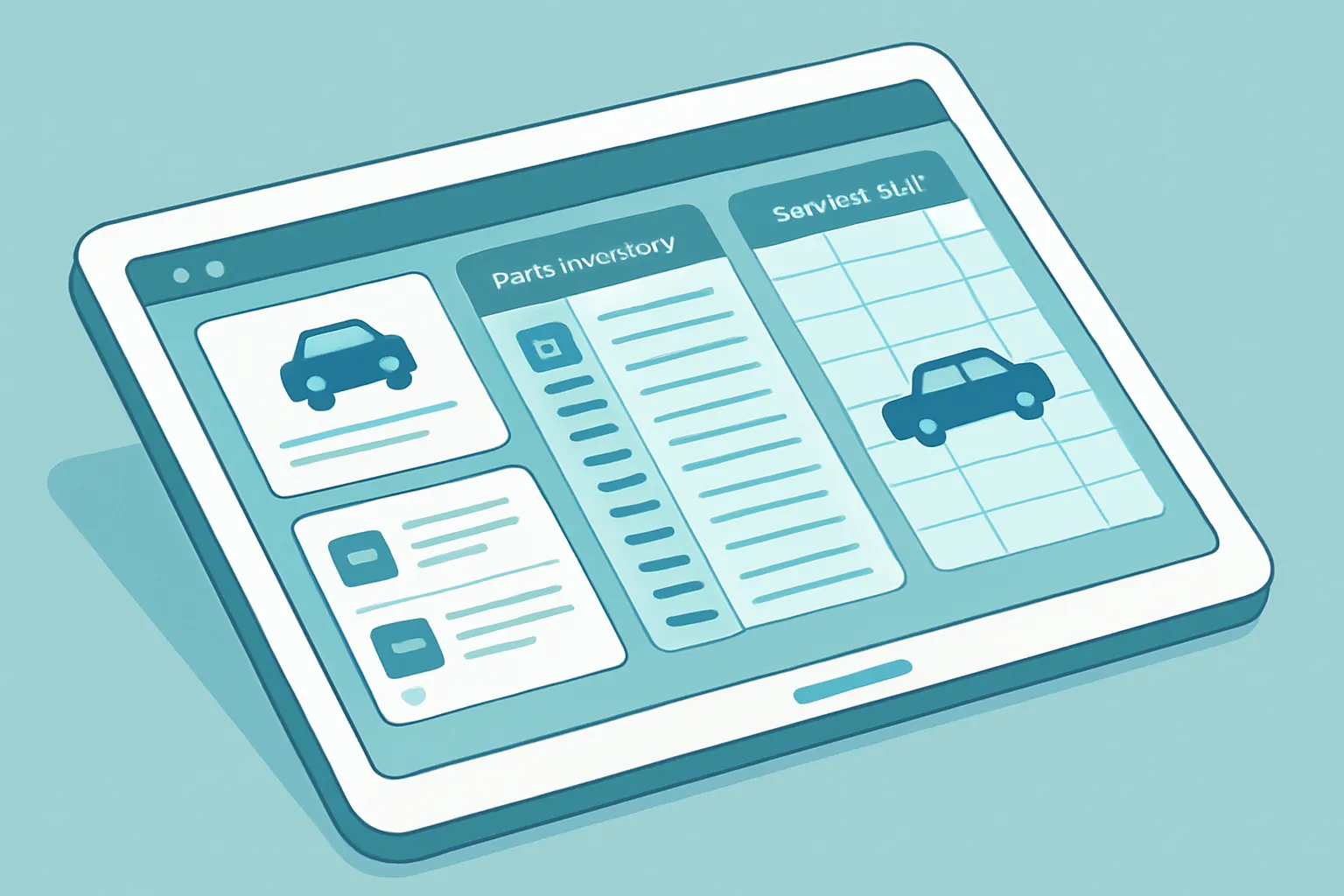
An auto repair shop runs on a cycle that repeats dozens of times a day: the customer arrives, an advisor diagnoses the problem, parts and labor get quoted, the customer approves, a technician does the repair, and finally the shop invoices and hands back the vehicle. In most shops — from the independent corner garage to the multi-location chain — that cycle is still run on paper tickets, a parts notebook, and phone calls to tell the customer the car is ready.
The problem isn’t a lack of effort from the team: it’s that no step in the process talks to the next one. The work order doesn’t know what parts are in stock, the stockroom doesn’t know which repairs are in progress, and the customer has no way to check status without calling and waiting for someone to pick up.
A custom system fixes this by connecting the work order, the parts inventory, and customer communication on a single platform, from the moment the vehicle comes in to the moment it leaves.
Where time and money get lost
- Paper or WhatsApp work orders. Without a centralized record, it’s easy to lose track of what was quoted, what was approved, and what’s still pending on each vehicle.
- Parts inventory disconnected from repairs. A technician discovers a part is missing only after starting the job, and the car sits idle waiting for a part that could have been ordered right after diagnosis.
- Slow quotes and approvals. Calling the customer to approve an extra item, not reaching them, and leaving the car parked for half a day waiting for a reply.
- No real visibility into per-job profitability. Without centralized data on parts cost, labor hours, and margins, it’s hard to know which types of jobs actually turn a profit and which barely cover costs.
Each of these points delays getting a vehicle back on the road and reduces how many cars the shop can service per day — the single biggest driver of profitability in the business.
What a custom auto repair shop system includes
1. Digital work orders from start to finish
Every vehicle generates a digital order that follows the full process: intake, diagnosis, quote, approval, repair, and delivery. The service advisor and the technician see the same real-time status, instead of depending on a paper ticket that can get lost or misplaced.

2. Parts inventory tied to every repair
The system automatically deducts parts used on each order and keeps real stock visibility, with reorder points for the highest-turnover items. This makes it possible to:
- Catch a missing part right at diagnosis and order it before the car sits idle.
- Calculate the real cost of each repair (parts + labor) to price jobs with a known margin, not a guess.
- Avoid duplicate purchases or parts that sit unused on a shelf.
3. Quotes and approvals from the customer’s phone
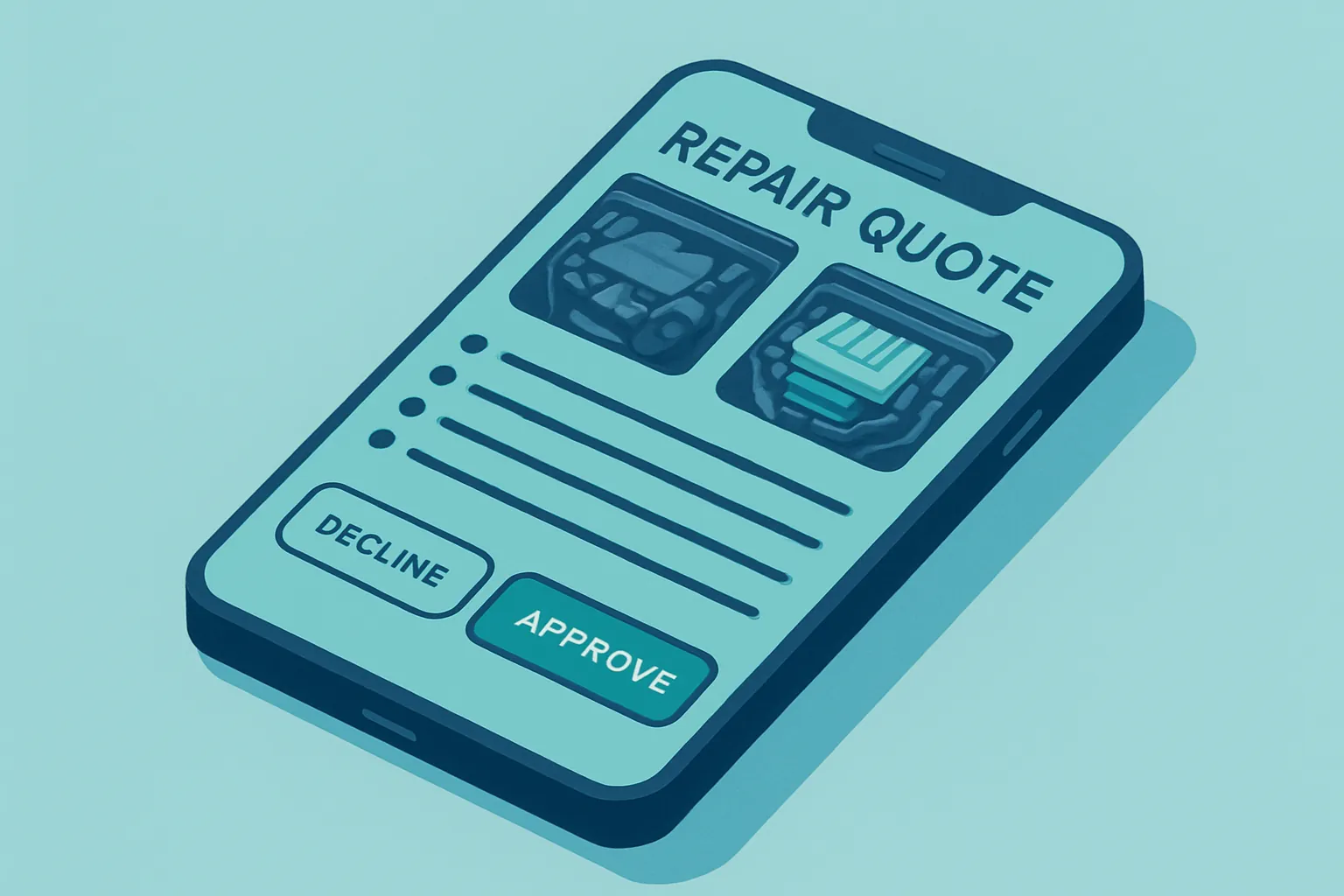
Instead of calling and waiting, the customer receives the quote with diagnosis photos over WhatsApp or a link, and approves (or declines) each line item from their phone. The technician can keep working on what’s already approved while an extra item gets resolved, instead of stopping work on the whole vehicle.
4. Vehicle and customer history
Every car builds up a history of past services, parts used, and pending recommendations. This speeds up the next diagnosis, helps anticipate maintenance (and sell it proactively), and gives the customer confidence that the shop actually knows their vehicle.
5. A dashboard for the owner or manager
A dashboard shows open orders by bay and by technician, average repair time, slow-moving parts, and profitability by service type — information that today usually lives only in the manager’s head.
Why custom instead of generic shop software
Generic shop management platforms charge per bay or per user, force you to operate on their own parts catalog, and rarely integrate with local electronic invoicing or region-specific suppliers.
A custom build:
- Adapts to your real operation — a general shop, a fleet-focused operation, or a multi-location chain — instead of forcing your process into someone else’s mold.
- Integrates what you already use: the WhatsApp Business API, electronic invoicing, parts suppliers, and your payment terminal.
- Grows with you: adding a bay, a location, or a fleet-service line doesn’t depend on someone else’s subscription plan.
- Removes recurring per-bay or per-user fees, which end up costing more over time than building your own system.
How to get started
This isn’t about digitizing everything at once. The most effective path is:
- Map the current flow — from the vehicle coming in to being delivered — and identify where time or information gets lost.
- Prioritize the module with the highest impact (usually work orders or parts inventory).
- Build and integrate incrementally, validating with advisors and technicians before rolling it out across every bay or location.
A shop that controls its work orders, parts, and customer communication from a single system doesn’t just service more cars per day: it gives the owner real visibility to make decisions about pricing, staffing, and inventory, instead of operating blind order by order.
Is your shop still running on paper tickets, a parts notebook, and phone calls to say the car is ready? At Kimo Solutions, we design custom systems for auto repair shops and automotive service chains. Let’s talk about your operation.
Have a project in mind?
Get in touch →